Fall Color in the North Georgia Mountains: A Guide to the Season and Its Best Viewing
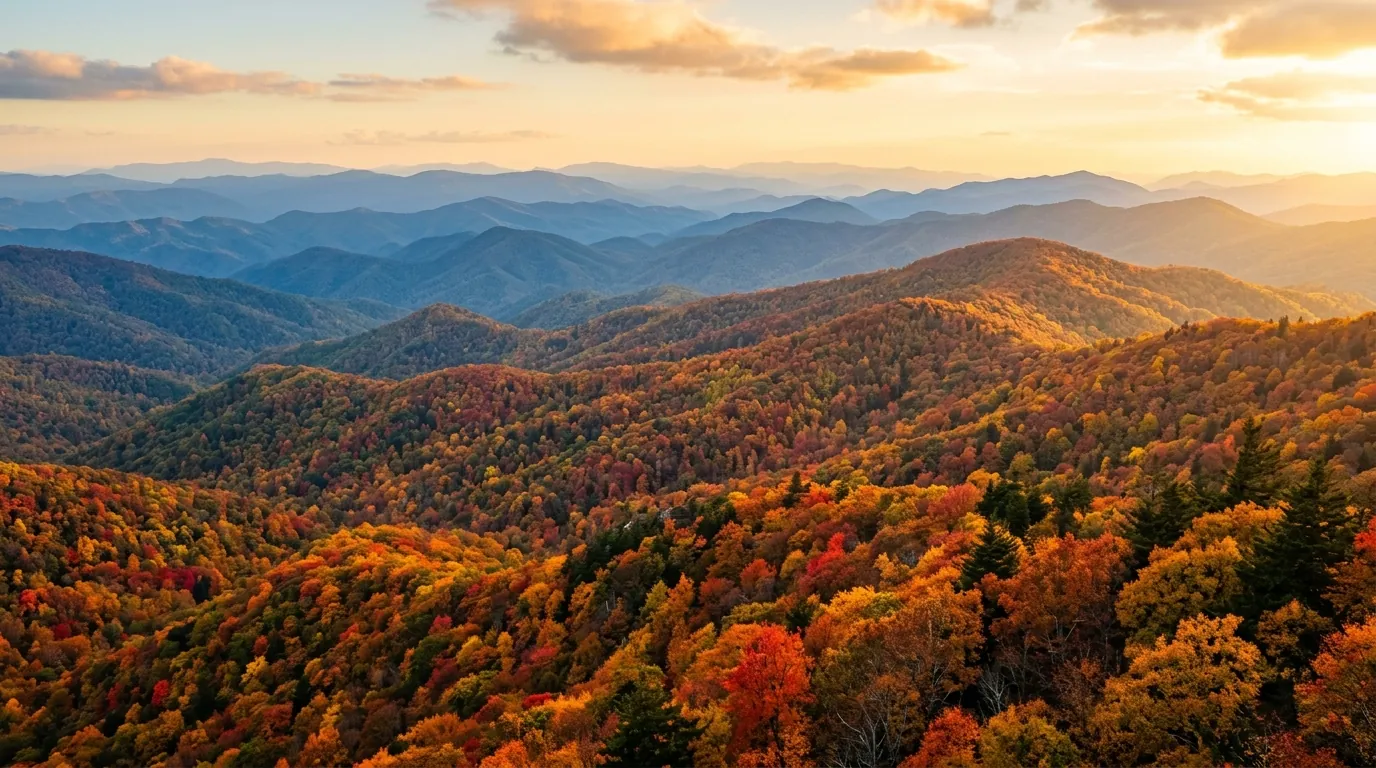
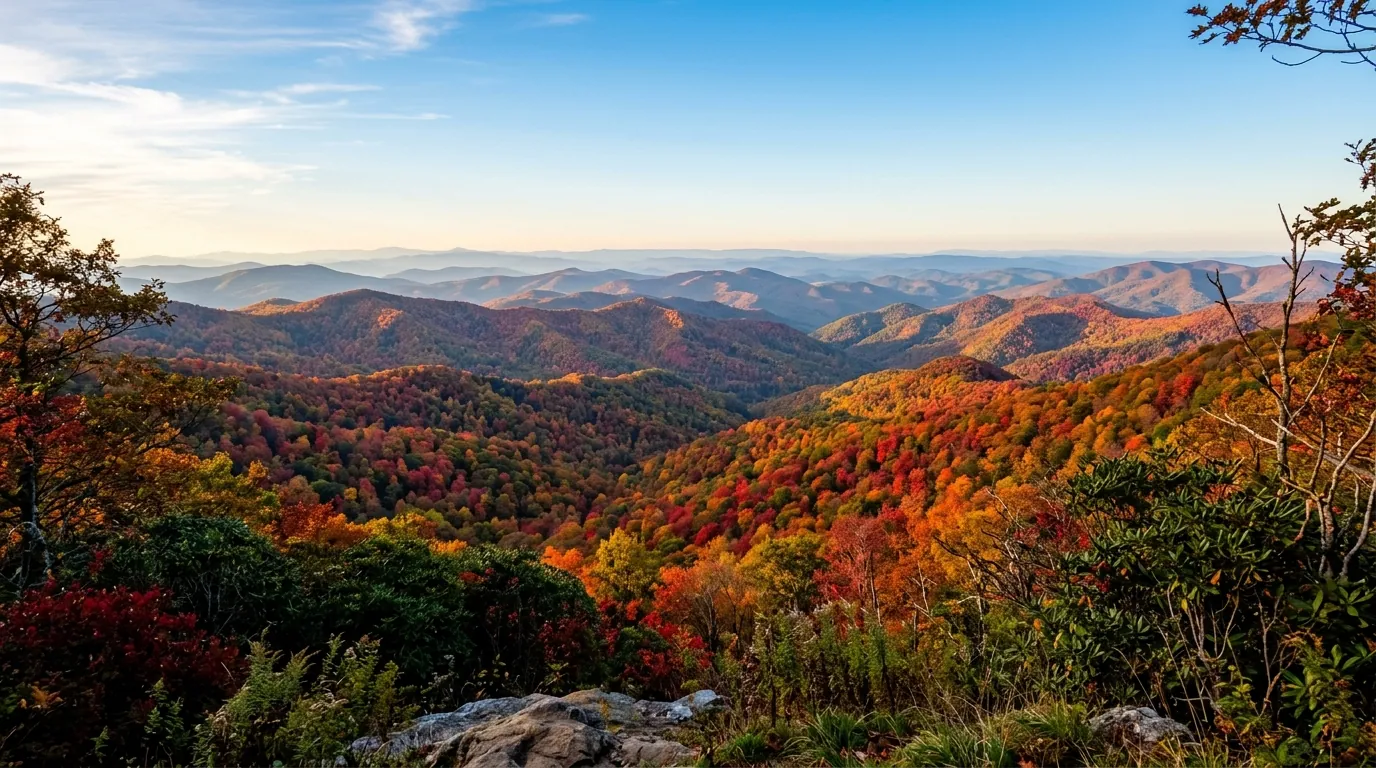
Of all the seasons that cycle through the North Georgia mountains, autumn is the one that draws the largest audiences and provokes the most conversation. The annual transformation of the deciduous forest canopy—from the deep greens of summer into the complex palette of red, orange, gold, and purple that marks October and early November—is among the most dramatic natural events in the eastern United States, and the Dahlonega area, sitting at the transition between the piedmont and the southern Blue Ridge, is particularly well positioned to experience it across a range of elevations and forest types.
The Science of Fall Color
The transformation of leaf color in autumn is a response to the combination of shortening days and cooling temperatures that signals to deciduous trees the approach of winter dormancy. As daylight hours decrease in late summer and early fall, trees begin to shut down the photosynthetic machinery in their leaves. Chlorophyll—the green pigment responsible for photosynthesis—breaks down and is reabsorbed into the tree, and the yellow and orange carotenoid pigments that were always present in the leaf but masked by the dominant green are revealed.
The brilliant reds and purples of certain species—red maple, sumac, Virginia creeper, dogwood—are produced by anthocyanins, pigments that are actually produced fresh in the leaf during the color-change process rather than simply unmasked. Anthocyanin production is stimulated by bright sunny days combined with cool nights; this is why the most spectacular fall color displays typically follow periods of warm, sunny days and cold (but not freezing) nights in late September and October. A season of adequate summer rainfall, followed by a gradual rather than abrupt onset of fall, tends to produce the richest color. A sudden hard freeze can terminate the color season prematurely.
The timing and intensity of fall color varies considerably by elevation and by species. High-elevation forests—above 3,500 feet on the southern Appalachians—typically peak two to three weeks earlier than lower-elevation sites. The earliest significant color appears in the third week of September at the highest elevations; the color front moves down the mountain slopes and into the lower valleys and piedmont through October, with lower piedmont areas not reaching peak until early to mid-November in some years. The Dahlonega area, at approximately 1,480 feet in town but with surrounding ridges and the approach to the Blue Ridge reaching 3,000 to 4,000 feet within a short drive, allows visitors to experience multiple stages of the color progression in a single weekend visit.
The Trees of the North Georgia Fall Palette
The deciduous forests of the southern Appalachians are among the most species-diverse temperate forests in the world, a consequence of the region’s role as a refugium for plant species during the last glacial maximum and its variable topography, which creates a mosaic of different soil types, moisture conditions, and sun exposures. This diversity translates directly into a richer and more varied fall color palette than is found in the more uniform forests of New England, which are dominated by far fewer tree species.
The red maples (Acer rubrum) are typically the first to turn, producing brilliant scarlet and crimson as early as mid-September at higher elevations. Sourwood (Oxydendrum arboreum), a mid-canopy tree native to the southern Appalachians, produces some of the most spectacular individual-tree color of any North Georgia species—deep burgundy and wine-red foliage with a lustrous quality that makes sourwood one of the most sought-after fall color trees in the region. Sugar maple (Acer saccharum) is less dominant here than in New England but contributes brilliant orange where it occurs. Tulip poplar (Liriodendron tulipifera), the characteristic tall tree of the cove forests, turns clear yellow in autumn and is spectacular in large stands. Blackgum (Nyssa sylvatica), one of the first trees to show any color change, produces a mixed palette of scarlet, orange, and purple that is sometimes visible as early as late August at higher elevations.
The oaks—white oak, chestnut oak, scarlet oak, red oak, and others—turn last and in colors ranging from russet and brown (white oak) to brilliant red (scarlet oak). Because oaks constitute the dominant canopy in many North Georgia forest communities, the oak color, which peaks in mid to late October at mid-elevation sites, determines much of the overall visual character of the peak season. The mixed display of oak russets, maple reds, poplar yellows, and sourwood wine-reds in a mature forest canopy is the hallmark of a North Georgia fall color peak and is genuinely difficult to describe to those who have not seen it.
Peak Color Timing and Reliability
The question most commonly asked about North Georgia fall color is: when exactly will it peak? The honest answer is that the peak cannot be predicted with precision more than a week or two in advance, and that “peak” is itself a somewhat misleading concept when applied to a landscape with as much elevational diversity as the North Georgia mountains. A visitor on any given weekend in early to mid-October is likely to encounter spectacular color at some elevation within a short drive, even if the valley floor below Dahlonega is still predominantly green.
As a rough guideline, the upper elevations of the Chattahoochee National Forest—the areas around Blood Mountain, Brasstown Bald, and the AT corridor above 3,500 feet—typically approach peak color in the first two weeks of October. The mid-elevation zone (2,000 to 3,500 feet), which includes much of the mountain road driving in the area, peaks roughly in the second and third weeks of October. The Dahlonega valley floor and the lower piedmont typically reach their best color in the final week of October and first week of November, though this can vary by two to three weeks in either direction depending on the season’s weather pattern.
The Georgia Department of Natural Resources maintains a fall color report on its website during the color season, updated weekly, that provides current conditions at a range of locations across the state. The Chattahoochee National Forest’s district ranger stations also maintain current trail and road condition information that can be useful in planning a foliage drive or hike.
Best Drives and Viewpoints
Richard B. Russell Scenic Highway (Georgia 348)
The Richard B. Russell Scenic Highway, a seventeen-mile stretch of Georgia Highway 348 running between Helen and Robertstown in White County, is the most celebrated fall foliage drive in North Georgia and one of the finest in the entire Southeast. The road climbs from the Chattahoochee River valley at Helen to Hogpen Gap (elevation 3,450 feet) on the Blue Ridge, then descends to Robertstown, passing through mature hardwood forest with minimal development throughout. At peak color, typically in mid-October, the drive is visually overwhelming—the canopy closes over the road in many sections, creating a tunnel of color. The road is accessible from Dahlonega via Georgia 115 to White County; the round-trip excursion adds roughly ninety minutes to the drive back from the Russell Scenic Highway’s western terminus.
Georgia 348 between Helen and Robertstown | No fee | May be closed in winter or during hazardous conditions
Brasstown Bald Road
At 4,784 feet, Brasstown Bald is the highest point in Georgia, and the paved road to its summit parking area provides the highest accessible vantage point in the state for fall color viewing. A short but steep half-mile trail from the parking area leads to the summit observation platform, which offers a 360-degree view of the southern Appalachians in multiple states. The surrounding forest is visible far below the summit, and in peak color conditions the panorama of the colored forest canopy extending to the horizon in every direction is one of the most spectacular sights in the eastern United States. Brasstown Bald is located approximately thirty miles north of Dahlonega via U.S. 19 and Georgia 180.
Georgia 180 Spur Road, Blairsville, GA | Phone: (706) 745-6928 | Parking fee required; shuttle available from parking area to summit
Winery Ridge Views
Several of the Dahlonega Plateau’s wineries occupy ridge-top or hillside locations with broad views over the surrounding valleys and forested ridges. During fall color peak, these viewpoints offer the unusual combination of vineyard aesthetics—the vine leaves themselves turning gold and russet in the harvest season—with the backdrop of the colored mountain forest. Wolf Mountain’s upper terrace, Three Sisters’ hillside vineyard, and Frogtown’s ridge overlook are all worth visiting during the color season for this compound visual effect. Most wineries require a tasting room visit or reservation; plan accordingly.
Practical Considerations for Fall Visits
Fall is Dahlonega’s busiest tourist season, with October weekends bringing the largest visitor volumes of the year. Accommodations fill far in advance for peak October weekends; visitors who have a specific weekend in mind should book lodging three to six months ahead. Winery tasting appointments, particularly at Wolf Mountain and Montaluce, require advance reservations during fall and may sell out weeks ahead of popular weekends.
Traffic on the main approach roads—U.S. 19 and U.S. 400/Georgia 53—can be heavy on peak fall weekends. The Dahlonega square’s parking areas fill by mid-morning on popular weekends; overflow parking is available at the county fairgrounds and in several designated lots with walking distance to the square. Visiting on a weekday during the peak foliage period is a significantly more relaxed experience and allows unhurried access to both the town’s attractions and the mountain drives, while sacrificing the weekend festival atmosphere that characterizes many October Saturdays.