Dahlonega, Georgia • North Georgia Mountains The Local Guide to the Gold Rush City Dahlonega, GA
THEDahlonega Journal

Your Complete Guide to Dahlonega, Georgia

Category: Blog

Your blog category

  • Dahlonega Real Estate Market Report: What’s Happening in 2026

    Dahlonega Real Estate Market Report: What’s Happening in 2026

    Rank Math Title: Dahlonega Real Estate Market Report: What’s Happening in 2026 | Gold Peach Realty

    Rank Math Description: What’s happening in the Dahlonega GA real estate market in 2026? Explore trends, buyer activity, and what’s driving demand in Lumpkin County this year.


    Dahlonega’s real estate market has been one of the more consistently watched corners of the North Georgia mountain landscape over the past several years. A combination of factors — proximity to Atlanta, natural beauty, growing remote-work adoption, and the town’s expanding lifestyle amenities — have kept buyer interest strong. Here’s a grounded look at where things stand in 2026.


    The Broader Context: Why Dahlonega Keeps Attracting Buyers

    To understand the Dahlonega market, you have to understand the migration story that’s been reshaping North Georgia for several years now.

    Atlanta-area residents have been leaving the metro in meaningful numbers, drawn by pandemic-era flexibility that turned into permanent remote and hybrid work arrangements. Dahlonega, roughly 65 miles north of Atlanta via GA-400, sits in an ideal position: close enough to maintain Atlanta connections when needed, far enough to offer a genuinely different quality of life.

    This isn’t a speculative trend — it’s visible in Lumpkin County’s population data, in school enrollment figures, and in the pace at which properties move when they come to market. The town has real infrastructure (a university, medical services, a growing restaurant and retail scene) that sustains permanent relocation rather than just second-home ownership.


    What’s Moving in 2026

    Single-Family Homes

    The core of the Dahlonega market is and remains single-family residential. Detached homes at various price points continue to represent the primary demand category. Entry-level inventory has been constrained in recent years, and that dynamic has not fundamentally changed — move-in-ready homes in good condition and accessible price ranges tend to generate competitive interest when they come to market.

    Mountain Cabins and Acreage Properties

    Mountain cabin properties with land represent a category of their own in Lumpkin County. These properties appeal to buyers who want recreational land, privacy, and the mountain lifestyle that Dahlonega’s flat-lot subdivisions don’t offer. Cabin properties with creek frontage, mountain views, or proximity to hiking trails command attention from second-home buyers as well as primary residents.

    North Georgia mountain cabins for sale

    New Construction Activity

    New construction in and around Dahlonega continues, though the pace is influenced by infrastructure availability (water and sewer access), land costs, and builder activity in the regional market. Buyers interested in new construction should verify current project status directly with developers, as new communities can move from active sales to sold-out faster than marketing materials are updated.

    Golf Community Real Estate

    Achasta, the Jack Nicklaus-designed private golf community along the Chestatee River, represents the premium segment of the Dahlonega market. Resale inventory in Achasta is limited and tends to attract qualified buyers specifically seeking the golf community lifestyle.

    Achasta Golf Community homes for sale


    Buyer Profile in 2026

    The Dahlonega buyer pool in 2026 reflects several distinct groups:

    Permanent relocators from Atlanta represent the largest segment. These buyers are making Dahlonega their full-time home, driven by lifestyle preferences, lower cost of living relative to metro Atlanta, and the flexibility to work remotely.

    Second-home and vacation property buyers remain active, particularly in the cabin and mountain acreage segment. These buyers are often using properties for personal use with the option of short-term rental income.

    Retirees and pre-retirees seeking a community with mountain character, accessible healthcare, and an active lifestyle. Dahlonega’s combination of natural setting, walkable downtown, and university community has made it a destination for this demographic.

    Investors represent a smaller but active portion of buyer activity, particularly in properties with short-term rental potential. Lumpkin County’s regulatory landscape for short-term rentals should be verified before purchasing with investment intent.


    Market Conditions: What Buyers and Sellers Should Know

    For Buyers

    The Dahlonega market rewards preparedness. Properties in popular price ranges and desirable locations — particularly those close to downtown, on acreage, or in golf communities — can move quickly. Having financing confirmed before you begin seriously touring properties is important, not just advisable.

    Working with a local agent who has genuine Dahlonega market knowledge matters here. National or metro Atlanta-focused agents often don’t have the community-specific insight needed to evaluate properties accurately in this market.

    For Sellers

    Properties that are priced accurately from the start and presented well continue to perform. The era of accepting any offer regardless of price or terms has normalized, which means sellers need realistic expectations and strong local agent guidance on positioning.

    selling a home in North Georgia what to expect


    Looking Ahead

    Several factors will shape the Dahlonega market through the remainder of 2026 and into the near term:

    Interest rate conditions continue to influence buyer qualification and willingness to move. Buyers who secured lower-rate mortgages on existing homes face the well-documented “lock-in effect” that suppresses resale inventory nationally — Dahlonega is not immune to this.

    Infrastructure investment in Lumpkin County — roads, water/sewer capacity, broadband access — will shape where growth can occur and at what pace.

    Commercial development on and around the GA-400 corridor near Dahlonega will continue to influence the town’s economic foundation and the buyer appeal of properties in different locations within the county.


    Frequently Asked Questions

    Is now a good time to buy in Dahlonega?

    Market timing is impossible to predict with certainty. What’s consistent is that Dahlonega has fundamentals — natural setting, growing amenities, proximity to Atlanta — that have supported demand across different rate environments. Buyers who find a property that genuinely meets their needs at a fair price generally have reason to feel confident regardless of the specific timing.

    How does Dahlonega’s market compare to other North Georgia mountain towns?

    Each mountain town has its own market dynamics. Dahlonega benefits from GA-400 access (no congested mountain highway to navigate), the University of North Georgia, and a particularly well-developed downtown. These factors differentiate it from comparables like Blue Ridge or Helen in ways that matter to many buyers.

    Are home prices in Dahlonega still rising?

    The pace of appreciation has moderated from the accelerated levels seen in prior years. Conditions vary by property type and location. Your agent can provide current comparable data for the specific property type and area you’re considering.

    What’s the inventory situation in Dahlonega right now?

    Inventory has remained relatively tight in popular segments, though conditions change. Working with a local agent who actively monitors new listings is the most reliable way to understand current availability.


    Looking for North Georgia real estate? Search listings and connect with our local agents at goldpeachrealty.com or call (770) 283-1223.

  • New Businesses Opening in Dahlonega GA: Growth and Development Updates

    New Businesses Opening in Dahlonega GA: Growth and Development Updates

    Rank Math Title: New Businesses Opening in Dahlonega GA: Growth Updates 2026 | Gold Peach Realty

    Rank Math Description: Explore new businesses and commercial growth coming to Dahlonega, GA in 2026. See how Lumpkin County’s economy is expanding and what it means for residents.


    Dahlonega’s commercial landscape has been evolving steadily, and 2026 is shaping up to be another active year for business development in Lumpkin County. New restaurants, expanding hospitality offerings, retail additions, and infrastructure improvements are all part of a growth picture that reflects the town’s sustained appeal as both a destination and a place to live.

    For residents and prospective buyers, understanding what’s happening commercially is directly relevant — business growth supports the local economy, adds to quality-of-life amenities, and signals the long-term health of a community.


    What’s Driving Business Growth in Dahlonega

    Before looking at specific developments, it helps to understand the forces creating the conditions for business growth here.

    Population growth in Lumpkin County has created demand for services and retail that wasn’t there even five years ago. As the permanent and part-time residential base expands, businesses that depend on local spending (grocery, healthcare, personal services, dining) have more reason to invest in the market.

    Tourism momentum continues to build around North Georgia wine country, outdoor recreation, and Dahlonega’s historical and cultural attractions. The visitor economy creates opportunity for hospitality businesses — lodging, dining, retail, and experience-based businesses like wineries, outfitters, and tour operators.

    The GA-400 corridor gives Dahlonega logistics advantages that more remote mountain towns lack. For businesses that need supply chain access or employee commuting from Gainesville or the Atlanta suburbs, Dahlonega’s position at the end of a major highway makes it more viable than alternatives.


    Hospitality and Lodging Expansion

    The lodging sector in and around Dahlonega has seen continued investment, driven by the overlap of outdoor recreation demand, wine tourism, and overflow from the general North Georgia mountain vacation market.

    Boutique accommodations — small inns, renovated historic properties, and purpose-built vacation rental complexes — have been among the more active development categories. The market for distinctive, experience-oriented lodging that goes beyond a standard hotel stay has grown alongside the broader travel trend toward “place-based” experiences.

    Short-term rental platforms have also driven a wave of property conversions and new constructions specifically positioned for Vrbo and Airbnb traffic. This segment is worth monitoring both as a business trend and as a factor in Dahlonega’s housing supply dynamics.

    Dahlonega GA things to do tourism guide


    Restaurant and Food Service Growth

    Dahlonega’s food scene continues to attract new entrants. The combination of a growing permanent population, high tourist traffic, and a cultural appetite for local and independent dining creates a favorable environment for food businesses.

    What’s Coming

    New restaurant concepts in the pipeline for the downtown area and the broader GA-400 corridor include casual dining expansions, cafe formats, and specialty food businesses catering to the town’s food-oriented visitor base.

    The challenge for new food businesses in Dahlonega, as in many small markets, is the seasonal nature of visitor traffic. Establishments that perform well during fall leaf season need to have strong weekday local business and shoulder-season strategies to maintain operations year-round. Businesses that solve this equation tend to be the ones that become fixtures; those that rely too heavily on peak-season traffic often don’t make it past year two.

    Winery and Beverage Business Expansion

    The North Georgia wine industry continues to expand, with both existing wineries adding capacity and new operations coming online in the region. The Dahlonega Plateau AVA is the core identity, but vineyards and production facilities are spread across a wider geographic area that overlaps with several surrounding counties.


    Retail and Commercial Services

    Retail growth in Dahlonega has been selective. The town’s historic character — and its residents’ stated preference for independent, locally owned businesses — creates both an opportunity and a constraint for commercial development.

    National chain retail has made limited inroads in the downtown core, which most residents view positively. The side streets and GA-400 commercial corridor accommodate service retail and essential businesses without disrupting the historic square’s identity.

    Healthcare services represent a growth area driven by the aging demographic component of Lumpkin County’s population growth. Expanded medical office space, specialist services, and supportive care facilities are part of the development picture as the county’s age profile evolves.

    living in Dahlonega GA cost of living and services


    Development Along the GA-400 Corridor

    The stretch of commercial and retail development along GA-400 heading into Dahlonega has seen incremental expansion over recent years. This corridor handles the volume-oriented retail and services that support the broader county population without burdening the historic downtown with chain retail development.

    New pad sites, retail centers, and commercial development along this corridor represent the growth infrastructure that makes the overall Dahlonega economy function — grocery anchors, fast-casual dining, automotive services, and professional offices that residents need but that don’t belong in the historic core.

    The corridor’s development trajectory has planning implications for residential growth nearby, which is worth tracking for buyers considering properties in the GA-400 adjacent areas of Lumpkin County.


    What Business Growth Means for Residents and Buyers

    For people who live in or are considering moving to Dahlonega, the business growth picture matters in concrete ways:

    More local service options reduce the need to drive to Gainesville or Atlanta for routine needs. Every time a quality grocery, healthcare provider, or professional service establishes in Lumpkin County, the quality of daily life for residents improves.

    Economic stability is supported by a diverse business base. Towns that depend too heavily on a single industry (tourism alone, for instance) are vulnerable to disruptions. Dahlonega’s growing mix of residential population, institutional anchors (the university), healthcare, and hospitality creates a more resilient economic foundation.

    Property values are influenced by the commercial environment surrounding residential areas. Growing, well-managed commercial development generally supports residential values; stagnation or neglect does the opposite.

    Dahlonega real estate market overview 2026


    Frequently Asked Questions

    How can I find out about new businesses opening in Dahlonega?

    The Dahlonega-Lumpkin County Chamber of Commerce is a primary source for business news in the area. Local Facebook groups, the Lumpkin County government website, and the local newspaper also cover commercial developments.

    Is Dahlonega growing too fast?

    Growth management is a legitimate concern in small towns that become popular destinations. Dahlonega’s city and county governments have planning and zoning processes in place, though views on the appropriate pace of development vary among residents. Attending planning commission meetings or reviewing county planning documents can give you a current picture of what’s proposed and what’s approved.

    Are there opportunities for new businesses in Dahlonega?

    Yes — the market has gaps in various service categories, and the growing population base creates ongoing demand. The Chamber of Commerce and local business development resources can provide more specific information for entrepreneurs considering the market.

    How does Dahlonega’s economy compare to other North Georgia mountain towns?

    Dahlonega’s economy is somewhat more diversified than many comparable mountain towns because of the university, the wine industry, and GA-400 accessibility. This diversity contributes to more consistent economic activity than towns that depend more heavily on seasonal tourism.


    Looking for North Georgia real estate? Search listings and connect with our local agents at goldpeachrealty.com or call (770) 283-1223.

  • Lumpkin County Schools: A Guide for Families Moving to Dahlonega

    Lumpkin County Schools: A Guide for Families Moving to Dahlonega

    Rank Math Title: Lumpkin County Schools: A Guide for Families Moving to Dahlonega | Gold Peach Realty

    Rank Math Description: Moving to Dahlonega with kids? Get the full picture on Lumpkin County Schools — campuses, programs, enrollment, and what families need to know before buying.


    For families with school-age children, the quality and character of local schools is one of the most significant factors in a relocation decision. If you’re considering a move to Dahlonega and Lumpkin County, here’s a practical guide to what the public school system offers, what questions to ask, and how to make an informed decision as a homebuyer.


    Overview of Lumpkin County Schools

    Lumpkin County operates a relatively compact school system that reflects the county’s size and character. Unlike large suburban school districts with dozens of campuses, Lumpkin County’s system gives families a more direct line to school administrators, teachers, and the community culture that shapes each campus.

    The district serves the city of Dahlonega and the broader Lumpkin County area through a set of campuses that cover elementary, middle, and high school grades. Because the district is small, families often find that their children’s school experience has a community feel that’s harder to replicate in larger suburban systems.


    School Campuses in Lumpkin County

    Elementary Level

    Lumpkin County’s elementary campuses serve the youngest students in the district. Elementary schools in smaller county systems like this one often have relatively small class sizes and close relationships between teachers and families. The specific campuses and grade configurations should be verified with the Lumpkin County School System directly, as attendance zones and grade configurations can change.

    For families buying a home in Lumpkin County, confirming which elementary school serves a specific address is important — not all parts of the county feed into the same campus, and attendance zone boundaries matter for enrollment.

    Lumpkin County Middle School

    Middle school in Lumpkin County covers the transition years between elementary and high school. This level is often where families look closely at academic programs, extracurricular options, and the general climate that shapes adolescent development. A smaller district means families often have more direct access to teachers and administrators than they would in a large suburban system.

    Lumpkin County High School

    Lumpkin County High School serves the county’s high school population and is the hub of the school system’s athletic and extracurricular programming. The school offers a range of academic options including Advanced Placement courses, Career and Technical Education pathways, and dual enrollment programs through the University of North Georgia — a significant local advantage given UNG’s campus in Dahlonega.

    The dual enrollment opportunity is worth highlighting for families with academically motivated high schoolers. The ability to take UNG courses for college credit while still in high school is a meaningful benefit that many small-town school districts can’t offer.

    University of North Georgia Dahlonega campus guide


    What Makes Lumpkin County Schools Distinctive

    Small-Town Scale

    In a smaller district, it’s common for students to know their teachers and administrators by name, for parents to have direct access to faculty, and for community events and school life to be closely intertwined. Families who value this kind of scale and relationship often find small-county school systems more satisfying than larger suburban districts despite having fewer course offerings.

    Community Presence

    Lumpkin County High School athletic events, performances, and graduation ceremonies are community events in the full sense — attended not just by immediate families but by neighbors, local business owners, and residents who maintain connection to the school system even after their own children have graduated.

    Access to UNG Resources

    The University of North Georgia’s Dahlonega campus provides resources that benefit the broader community including the school system. Academic programs, library access, athletic facilities, and cultural events all extend in some form to the community surrounding the campus.


    Questions Families Should Ask Before Enrolling

    If you’re relocating to Dahlonega with school-age children, the following questions will help you make an informed assessment:

    What are the current attendance zones? Zone boundaries can change with growth. Confirm the zone for any specific address before making a purchase decision based on school assignment.

    What AP and dual enrollment courses are currently offered? Course offerings can change based on teacher availability and enrollment. Verify current options directly with the high school if this is a priority for your family.

    What are the transportation arrangements? Rural county schools often have long bus routes. Understanding bus availability and timing for a specific address is practical information for working families.

    What extracurricular programs are active? Clubs, arts programs, athletics, and after-school activities matter to students and families. The current lineup can be confirmed with the school directly.

    What is the district’s approach to special education and learning support services? Families with children who have IEPs or specific learning needs should connect directly with the district’s special education coordinator to understand available services.

    moving to Dahlonega GA family guide


    Private School and Homeschool Options

    Dahlonega’s small size means private school options within the immediate area are limited. Families who require specific faith-based, pedagogical, or specialized private school environments may find that options within easy commuting distance are more limited than in metro areas.

    Homeschooling is an active choice for some Lumpkin County families, supported by Georgia’s relatively straightforward homeschool notification requirements and the existence of homeschool co-ops and community organizations in the region.

    For families with specific private school requirements, assessing what’s available within a reasonable drive of Dahlonega before committing to a location is important due diligence.


    Higher Education Access

    The University of North Georgia’s Dahlonega campus is a genuine asset for the community, providing access to degree programs, community education, cultural events, and the general intellectual vitality that comes from having a university in a small town.

    For families with college-bound students, having a four-year university literally in town is meaningful — both for the dual enrollment opportunity during high school and for the option of an affordable in-state university accessible without leaving home if that’s a choice students want to make.

    living in Dahlonega GA quality of life guide


    Frequently Asked Questions

    How do I find out which school serves my address in Lumpkin County?

    The Lumpkin County School System website and main office can provide attendance zone information for specific addresses. This is worth confirming before making a purchase decision if school assignment is a factor.

    What sports are available at Lumpkin County High School?

    LCHS participates in GHSA (Georgia High School Association) athletics across multiple sports. The full current lineup of teams and programs can be confirmed on the school’s website or by contacting the school directly.

    Is the Lumpkin County School System growing?

    Lumpkin County’s overall population growth has put pressure on the school system’s capacity in recent years. Facilities investment and planning to accommodate growth are ongoing considerations for the district. Current enrollment and capacity information can be obtained from the district office.

    Are there before- and after-school care options in Dahlonega?

    Options exist but are more limited than in larger suburban markets. Families should assess specific childcare availability for the age group and school location relevant to their needs.


    Looking for North Georgia real estate? Search listings and connect with our local agents at goldpeachrealty.com or call (770) 283-1223.

  • Dahlonega GA Cost of Living: What New Residents Should Expect

    Dahlonega GA Cost of Living: What New Residents Should Expect

    Rank Math Title: Dahlonega GA Cost of Living: What New Residents Should Expect | Gold Peach Realty

    Rank Math Description: What does it actually cost to live in Dahlonega, GA? Here’s a realistic breakdown of housing, groceries, taxes, utilities, and daily expenses for new residents.


    One of the most common questions from people considering a move to Dahlonega is straightforward: what will it actually cost to live here? It’s a reasonable thing to want to know before making a major relocation decision, and the honest answer is more nuanced than a simple comparison to Atlanta or national averages.

    This guide breaks down the real cost-of-living picture in Dahlonega and Lumpkin County for new residents thinking about making the move.


    Housing: The Dominant Cost Factor

    For most households, housing is the largest single expense, and it’s where the Dahlonega picture looks most favorable compared to metro Atlanta.

    Purchase Prices

    Lumpkin County’s housing market has seen appreciation over the past several years, which means the significant pricing gap between Dahlonega and metro Atlanta suburbs has narrowed somewhat. That said, what you can buy for a given budget in Lumpkin County still generally exceeds what’s available at comparable prices in Forsyth, Cherokee, or Fulton counties.

    Mountain cabins with acreage, historic homes near the downtown square, newer construction in established neighborhoods, and golf community properties all represent the range of what’s available. The specific price point for each category should be verified with current MLS data — your agent can provide a real-time picture.

    Rental Market

    Dahlonega’s rental market is smaller than its for-sale market. The town’s character and the nature of its population draw favors ownership over renting for most households who relocate here. Rental inventory exists but is limited, and the short-term rental market (Airbnb, Vrbo) has absorbed some supply that might otherwise be available for long-term tenants.

    Families who want to rent before buying to test the community should plan for limited options and potentially higher relative costs than the for-sale market would suggest.

    Dahlonega GA homes for sale current listings


    Property Taxes

    Georgia property taxes are calculated based on assessed value and the applicable millage rate. Lumpkin County’s overall property tax burden is generally lower than that of comparable metro-area counties, though specific rates vary based on property type, location within or outside city limits, and applicable exemptions.

    Georgia’s homestead exemption program provides meaningful relief for primary-residence owners. Other exemptions apply for seniors and veterans. Verifying current millage rates and available exemptions with the Lumpkin County Tax Commissioner’s office before closing is worth doing — the numbers can affect your monthly carrying cost meaningfully.


    Utilities

    Utility costs in Dahlonega vary based on several factors that are worth understanding:

    Electric service is provided primarily through Habersham EMC and other cooperatives serving the area. Mountain homes, especially those with electric heat, can run higher utility bills in winter than homeowners from warmer climates expect.

    Natural gas is available in parts of Dahlonega but not universally — many rural and cabin properties rely on propane rather than natural gas. Propane delivery pricing fluctuates and can represent a meaningful heating cost in winter.

    Water and sewer vs. well and septic is a distinction that matters for operating costs. Municipal water and sewer (available within the city limits) involves monthly utility charges but is generally predictable. Well and septic systems involve maintenance costs and the occasional larger repair or replacement expense. Understanding which applies to a specific property is part of standard due diligence.

    Internet service has improved significantly in recent years, but rural Lumpkin County still has areas with limited high-speed options. For remote workers, confirming broadband availability at a specific address before purchasing is essential.


    Groceries and Daily Expenses

    Dahlonega has grown its grocery and essential retail offerings, though it remains a smaller market than suburban Atlanta. The nearest Costco, large Target, or major specialty retailer is a drive away — typically Gainesville or Cumming, depending on what you’re looking for.

    For day-to-day grocery needs, options within Dahlonega itself are adequate for most households. The farmers market and local food producers supplement conventional grocery options with fresh, seasonal products.

    Dining out in Dahlonega reflects the independent-restaurant character of the town. The price range runs from casual lunch spots comparable to anywhere in Georgia to mid-range dinner options. High-end dining as a category is limited — Dahlonega isn’t trying to compete with Atlanta’s restaurant scene, and the town’s dining is better understood on its own terms.

    things to do and dining in downtown Dahlonega


    Healthcare and Medical Services

    Healthcare is an area where Dahlonega, like many small mountain towns, is in a growth phase. Primary care and some specialist services are available locally, with regional hospital access requiring a drive to Gainesville (Northeast Georgia Medical Center) or other facilities in adjacent counties.

    For routine healthcare needs, local options have expanded. For anything complex or specialized, expect to travel. This is a genuine practical consideration, particularly for families with ongoing medical needs or older residents who may require more frequent healthcare access.


    Transportation Costs

    One of the less-discussed but significant cost factors in Dahlonega is transportation. This is a car-dependent community — outside of the walkable downtown core, a vehicle is a practical necessity. Multiple-vehicle households are the norm.

    The trade-off is commute cost. For residents who work locally or remotely, transportation spending may be lower than in a metro context (less daily driving, no toll road expenses, lower parking costs). For residents who commute to Atlanta regularly, the GA-400 commute adds fuel and vehicle-wear costs that don’t exist if you live closer to work.

    Gas prices in Dahlonega track with the broader regional market and are generally comparable to northern Atlanta suburbs, though slightly higher than metro area averages.


    Overall Cost-of-Living Assessment

    Dahlonega’s overall cost of living is generally lower than comparable Atlanta suburbs for housing, but that advantage is reduced when accounting for the trade-offs: limited access to certain services and retailers, healthcare requiring travel for anything specialized, and transportation costs for households with Atlanta connections.

    For buyers who are making a genuine lifestyle shift — working locally or remotely, reducing overall consumption, and finding satisfaction in what the mountain community offers — the financial picture can be very favorable. For buyers who plan to maintain substantial Atlanta connections or need frequent access to major metro services, the calculus is more complicated.

    is Dahlonega GA a good place to live


    Frequently Asked Questions

    Is Dahlonega cheaper to live in than Atlanta?

    For housing, generally yes. For everything else, the comparison is more nuanced. Services that require a drive add time and fuel costs. Daily expenses for groceries and basics are comparable. The overall picture depends on your specific lifestyle and spending patterns.

    Are there significant hidden costs in mountain home ownership?

    Mountain properties can have higher maintenance costs related to terrain, weather exposure, and the wear that comes from older building stock in rural areas. Well and septic maintenance, propane costs, and occasional infrastructure challenges are factors that buyers from conventional suburban backgrounds sometimes underestimate.

    How does the cost of living in Dahlonega compare to other North Georgia mountain towns?

    Dahlonega generally tracks similarly to comparable mountain towns in the region, with some premium reflecting its above-average amenity base and GA-400 accessibility.

    What income level do you need to live comfortably in Dahlonega?

    This depends entirely on lifestyle, family size, and whether you’re carrying a mortgage. There’s no universal answer, but the combination of housing costs, utilities, transportation, and services in Lumpkin County is manageable for a broad range of income levels relative to metro Atlanta.


    Looking for North Georgia real estate? Search listings and connect with our local agents at goldpeachrealty.com or call (770) 283-1223.

  • Why Dahlonega GA Is One of Georgia’s Best Small Towns to Live In

    Why Dahlonega GA Is One of Georgia’s Best Small Towns to Live In

    Rank Math Title: Why Dahlonega GA Is One of Georgia’s Best Small Towns to Live In | Gold Peach Realty

    Rank Math Description: Why do so many people choose to call Dahlonega, GA home? Explore the reasons this North Georgia mountain town consistently ranks among Georgia’s best small towns.


    Georgia has more than its share of charming small towns. Savannah gets the national press. Thomasville has its antebellum mystique. Tybee has its beach-town regulars. But for people who want mountain scenery, genuine community, history, and a lifestyle that can’t be replicated in a suburb, Dahlonega has a case that’s hard to match anywhere in the state.

    This is about why Dahlonega keeps showing up on lists of Georgia’s best small towns — and more importantly, why the people who actually move here tend to stay.


    The Setting Is the Foundation

    Dahlonega’s most immediate advantage is something no planning document, tax policy, or economic development strategy can manufacture: it’s in the right place. The Blue Ridge Mountain foothills create a landscape that is genuinely beautiful across all four seasons, and Dahlonega sits at a point within that landscape where the elevation, river corridors, forests, and agricultural land come together in a way that feels both dramatic and livable.

    This isn’t scenery you drive past. It’s scenery you live inside. The ridgelines visible from the historic square, the Chestatee River that runs through the valley below town, the wooded roads that connect neighborhoods to the surrounding mountains — they’re not backdrop; they’re the actual environment of daily life.

    For people who grew up in flat Georgia terrain or who’ve spent years in urban environments, moving to Dahlonega often produces a response that’s hard to articulate without sounding hyperbolic. The landscape changes how you experience a morning walk, a drive home from the grocery store, and a view from your back porch.


    Real History, Not a Theme Park Version

    Many Georgia towns market their history. Dahlonega has real history that doesn’t need marketing.

    The site of America’s first major gold rush. Home of a United States Mint that operated for over two decades before the Civil War. A town that survived the economic disruption that followed the California rush, rebuilt its identity, and grew into the mountain city it is today. The Dahlonega Gold Museum on the town square is housed in the original county courthouse, and it contains genuine artifacts — coins, tools, documents — from a period that shaped American history.

    This historical depth gives Dahlonega a character that newer, purpose-built mountain resort towns simply don’t have. Walking the square, you’re in a place where things actually happened, and that reality is embedded in the buildings, the streets, and the institutional memory of the community.

    Dahlonega Georgia history and heritage tour


    A Downtown That Works

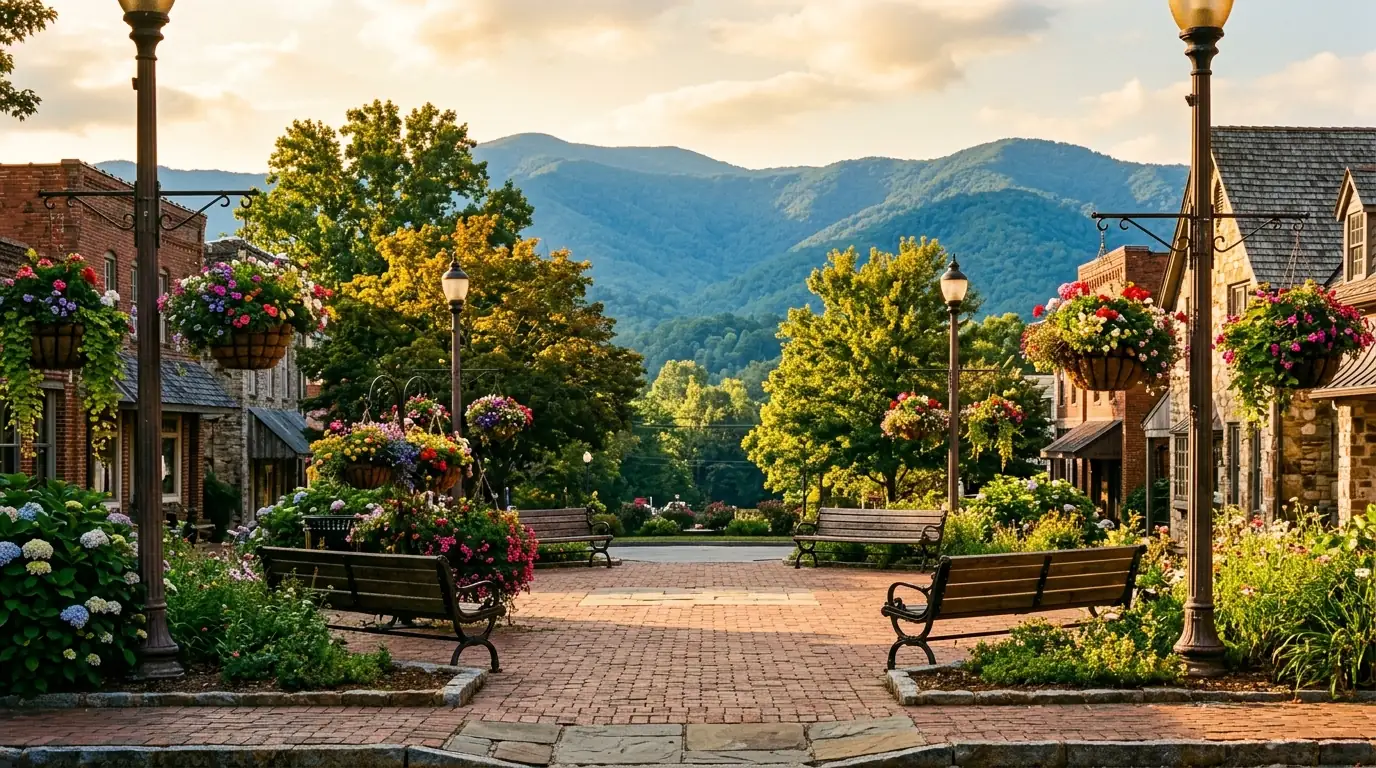
    Dahlonega’s historic square is not a tourist facade. It’s a functioning community center where locals and visitors share the same sidewalks, restaurants, coffee shops, and gathering spaces.

    The preservation of independent, locally owned businesses on the square is a genuine accomplishment. Many comparable small towns have seen their historic downtowns fill with antique stores and fudge shops that serve tourists but offer nothing to permanent residents. Dahlonega’s square has avoided that fate — it has dining worth eating at on a Tuesday, shops worth visiting in January, and a physical environment that people actually want to be in.

    The University of North Georgia’s campus adjacency to downtown also keeps the square energized with students, faculty, and visitors drawn by academic programming. That institutional anchor has been crucial to maintaining downtown vitality through economic cycles that have hollowed out similar small-town commercial cores elsewhere.

    downtown Dahlonega GA guide for residents


    The University Changes Everything

    The University of North Georgia’s Dahlonega campus is not incidental to the town’s quality of life — it’s central to it.

    A university in a small town brings intellectual culture, artistic programming, athletic events, and the general energy of a learning community. It provides employment that isn’t dependent on tourism cycles. It attracts faculty and staff who are often highly educated, culturally engaged, and committed to community involvement. It gives high school students dual enrollment access. It gives lifelong learners continuing education options. It provides a community gathering space for performances, lectures, and exhibitions.

    For buyers considering a small-town move from an urban environment, the presence of a university is often a tipping-point factor. It means the things you valued about city life — intellectual community, cultural programming, accessible higher education — don’t disappear when you leave.


    The Wine Country Dimension

    The Dahlonega Plateau American Viticultural Area is a real thing with real cultural weight in the North Georgia mountains. The wine industry has grown from a novelty into a genuine regional identity marker, attracting visitors, supporting agricultural land use, and generating economic activity that benefits the broader community.

    Living in Dahlonega means living in wine country in a way that residents of most Georgia communities simply don’t. Winery events, harvest seasons, tasting room culture, and the particular character of a community that takes its regional agricultural identity seriously — these are part of everyday life here.

    North Georgia wine country guide


    Outdoor Recreation at the Door

    The trailhead at Amicalola Falls State Park — one of the southern Appalachian Trail approach trailheads — is minutes from Dahlonega. The Chestatee River offers kayaking and fly fishing. The mountain terrain provides hiking, cycling, and overlook access that outdoors enthusiasts from across the Southeast drive hours to reach.

    For residents, this isn’t a vacation benefit. It’s a Tuesday afternoon option. The ability to be on a trail within fifteen minutes of finishing your workday, or to kayak a mountain river on a Saturday morning and still be back in town for lunch, is a quality-of-life factor that has to be experienced to fully understand.


    Community That Actually Exists

    This is the factor that’s hardest to quantify but most important to the people who move here and stay. Dahlonega has genuine community.

    There are neighbors who know each other’s names. There are local institutions — the church, the school, the university, the farmers market — that bring people together regularly. There are local business owners who recognize your face and remember your order. There is a civic life that is active, accessible, and meaningful in ways that suburban life rarely is.

    For people who have experienced the isolation that can come with suburban living — surrounded by houses but without genuine connection — Dahlonega’s community density is something they often describe as one of the most unexpected and most valued aspects of moving here.

    moving to Dahlonega GA what to expect


    Frequently Asked Questions

    What are the downsides of living in Dahlonega?

    Honest answer: limited service depth compared to metro areas, healthcare requiring travel for anything specialized, car dependency outside the downtown core, and a more limited job market for people who need in-person employment. None of these are dealbreakers for the right buyer, but they’re worth acknowledging.

    Is Dahlonega a good place to raise a family?

    Many families find it excellent — the school system has small-town scale, outdoor access is exceptional, the university provides enrichment opportunities, and the community character is generally safe and family-oriented.

    Is Dahlonega too touristy to actually live in?

    The tourist traffic is real, especially on fall weekends. But Dahlonega has a permanent community with a full year-round life that is distinct from tourist season. Residents learn quickly which spots to avoid on peak weekends and when the town is genuinely their own.

    What types of buyers tend to be happiest in Dahlonega?

    People who genuinely connect with outdoor recreation, small-town community, and the mountain lifestyle. Remote workers and retirees tend to rate quality of life here very highly. People who need constant access to urban services, entertainment variety, or large job markets may find it limiting.


    Looking for North Georgia real estate? Search listings and connect with our local agents at goldpeachrealty.com or call (770) 283-1223.

  • Living in Dahlonega: What It Is Actually Like to Call This Mountain Town Home

    Living in Dahlonega: What It Is Actually Like to Call This Mountain Town Home

    Every year, a significant number of the visitors who come to Dahlonega for a weekend or a week find themselves asking a more fundamental question: what would it be like to live here? The question is understandable. The combination of natural beauty, historic character, genuine community life, and relative affordability by urban standards that makes Dahlonega attractive as a destination also makes it legible as a permanent address. This article attempts to give an honest account of what life in Dahlonega and Lumpkin County actually involves—the practical realities as well as the genuine pleasures.

    The Community

    Dahlonega is the county seat of Lumpkin County, and the town’s permanent population stands at approximately seven thousand residents within the city limits, with the broader county population near thirty-three thousand. The demographic composition of the community has shifted noticeably over the past two decades: the traditional base of long-rooted families with multi-generational ties to the county has been joined by a growing population of retirees relocating from Atlanta and other metropolitan areas, a substantial university community of faculty, staff, and their families, and a smaller but increasingly visible cohort of remote workers whose careers have uncoupled from geography in the era of widespread broadband internet.

    The result is a community more internally diverse than a first impression of a small Georgia mountain town might suggest, and that diversity tends to sustain a broader range of services, cultural offerings, and civic engagement than would otherwise be present. The university brings concerts, lectures, and theatrical performances to town. The retiree population supports local arts organizations and sustains demand for higher-quality restaurants and specialty retail. The tourism economy creates service sector employment and justifies the kind of investment in downtown commercial properties that keeps the square vital.

    The town retains, despite this evolution, a fundamentally small-town character. Faces become familiar quickly; the cashier at the hardware store knows which street you live on; the farmers market becomes a weekly social occasion rather than merely a grocery errand. For people who have spent careers in large cities and crave the anonymity and velocity of urban life, this can be a difficult adjustment. For people who have long wanted precisely this kind of social fabric and have not been able to find it in the suburbs where their careers required them to live, it is the primary attraction.

    The Housing Market

    Lumpkin County’s housing market has experienced substantial appreciation over the past decade, driven by both primary residential demand and the growth of the vacation rental and second-home market. Properties that were modestly priced by Georgia standards a decade ago have seen values increase considerably, and the county no longer qualifies as a bargain real estate market relative to the Atlanta metropolitan area in the way it once did. That said, prices remain significantly below those of comparable mountain markets in western North Carolina, Tennessee, and Virginia, and the range of available property types means that buyers at various price points can find workable options.

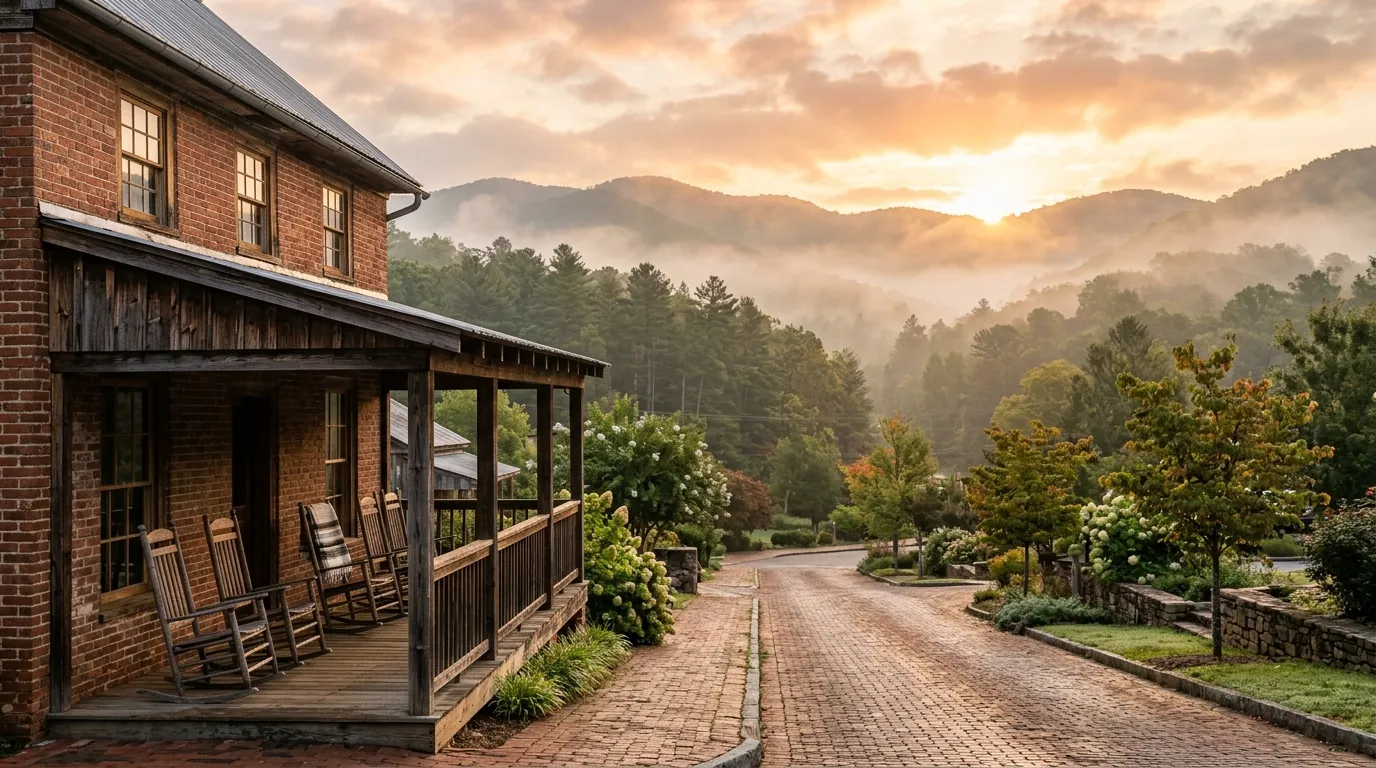
    In-town Dahlonega offers historic homes on the residential streets surrounding the square, with a range of styles reflecting construction from the late nineteenth century through the mid-twentieth. These properties tend to command premium prices relative to their square footage given their location, but they offer walkability to the square’s restaurants, shops, and cultural amenities that is otherwise unavailable in a rural county. Neighborhoods on the immediate outskirts of the city limits offer more recent construction and more yard space at somewhat lower price points.

    The mountain cabin market—the segment that attracts the most media attention and the most out-of-county buyers—spans a wide range, from modest older cabins on small wooded lots to expansive luxury properties on large mountain tracts with long-range views. Vacation rental income potential has driven up prices in this segment and created competition between buyers seeking primary residences and investors purchasing for short-term rental income. Properties with good rental history and established bookings trade at significant premiums.

    Schools and Education

    Lumpkin County School District operates the county’s public schools, with a high school, middle school, and several elementary schools serving the county’s student population. The district has invested in facility improvements in recent years and maintains accreditation in good standing. For families considering a move to the area, the presence of the University of North Georgia provides a distinctive educational resource: dual enrollment programs allow qualified high school students to take college courses for credit, and the university’s library, events, and athletic facilities are available to the broader community.

    Private school options within Lumpkin County are limited; families seeking private education typically look to schools in Gainesville, approximately thirty minutes southeast on Highway 60, where a range of religious and independent school options is available. The drive to Gainesville is a practical commute distance for daily school transportation and is a route that many Lumpkin County residents make regularly for employment, medical care, and commercial services not available locally.

    Healthcare

    Healthcare services in Dahlonega are adequate for routine and urgent care needs but limited in scope for complex or specialized medical care. Northside Hospital Dahlonega, a community hospital on the north side of town, provides emergency services, primary care, and a range of outpatient services. For specialty care—cardiology, oncology, orthopedics, neurology, and other subspecialties—residents typically travel to Gainesville, which hosts Northeast Georgia Medical Center, a comprehensive regional hospital and one of the larger medical facilities in Northeast Georgia.

    Access to healthcare is one of the more significant practical considerations for prospective residents, particularly retirees with complex medical needs. The thirty-minute drive to Gainesville is manageable for planned care but represents a meaningful constraint in emergencies, and the ambulance transport time for critical conditions is a reality of rural life that prospective residents should take seriously. Telehealth services have expanded considerably in recent years and now cover a significant range of routine medical consultations without requiring in-person travel.

    Getting Around and Getting Away

    Dahlonega is an automobile-dependent community. There is no public transit system serving the town, and the distances between the residential areas, the commercial square, and the surrounding employment, healthcare, and commercial destinations make walking or cycling impractical for most daily needs. A household with multiple adults will typically require multiple vehicles to function comfortably, and the availability of a reliable automobile is a basic practical requirement of life in Lumpkin County.

    The drive to Atlanta’s northern suburbs—Alpharetta, Cumming, Roswell—takes approximately one hour on a clear weekday morning via Georgia 400 from Dawsonville. To Atlanta’s downtown core, the drive is roughly ninety minutes under favorable conditions but can extend to two hours or more during peak traffic periods, which makes Dahlonega a realistic remote-work base for people who commute occasionally but not daily. The Gainesville commute (approximately thirty minutes on GA 60 or GA 115) is the most common employment-related daily drive for Dahlonega residents.

    Hartsfield-Jackson Atlanta International Airport is approximately ninety minutes south on Georgia 400 and I-285/I-85, making air travel accessible for the same level of logistical effort that suburban Atlanta residents experience. The drive is straightforward and follows major highways throughout; the airport’s role as one of the world’s busiest means that direct flights to most domestic and many international destinations are available without connecting through a hub.

    The Daily Pleasures

    Whatever its practical limitations, life in Dahlonega offers daily pleasures that are genuinely difficult to replicate elsewhere. The mountains are not a backdrop or a weekend destination—they are the daily visual context of life in the town, always present, changing with weather and season in ways that sustain attention across years and decades. A morning run on a trail in the Chattahoochee National Forest before work, a Saturday afternoon on the deck of a winery watching the ridgeline change color in the October light, an evening walk to the square for dinner without the need to drive—these are not weekend luxuries but regular features of ordinary life.

    The rhythm of the seasons is more pronounced in Dahlonega than in Atlanta, both because the cooler climate amplifies the seasonal differences and because the agricultural and viticultural year gives the community a framework of harvests, plantings, and festivals that marks time in ways the urban calendar does not. The transition from summer to fall—when the nights begin to cool, the vine leaves turn at the wineries, and the air acquires the particular clarity of a North Georgia autumn—is experienced as a genuine event, not merely a change in the weather application.

  • Eating and Drinking in Dahlonega: A Guide to the Local Food Scene

    Eating and Drinking in Dahlonega: A Guide to the Local Food Scene

    The culinary life of Dahlonega has expanded considerably in the past decade, moving from a scene defined almost entirely by traditional Southern cooking and tourist-oriented convenience fare toward something more genuinely varied and, in certain respects, ambitious. The presence of the University of North Georgia creates a year-round demand for diverse dining options that would not otherwise exist in a town of this size; the influx of wine country visitors from Atlanta and beyond has elevated expectations for food and hospitality; and a growing population of retirees and second-home owners with cosmopolitan tastes has supported restaurants and food producers that might not have found an audience in an earlier era. The result is a dining scene that rewards exploration.

    The Smith House: A Dahlonega Institution

    Any serious account of dining in Dahlonega must begin with the Smith House, which has occupied its position on South Chestatee Street since 1922 and represents the most direct culinary connection to the town’s deep past. The restaurant operates on a family-style service model that is itself a historical artifact—long tables laid with an array of Southern dishes, passed family-style to all who sit together regardless of acquaintance, in the tradition of the boarding house meals that were once standard in small-town Southern America.

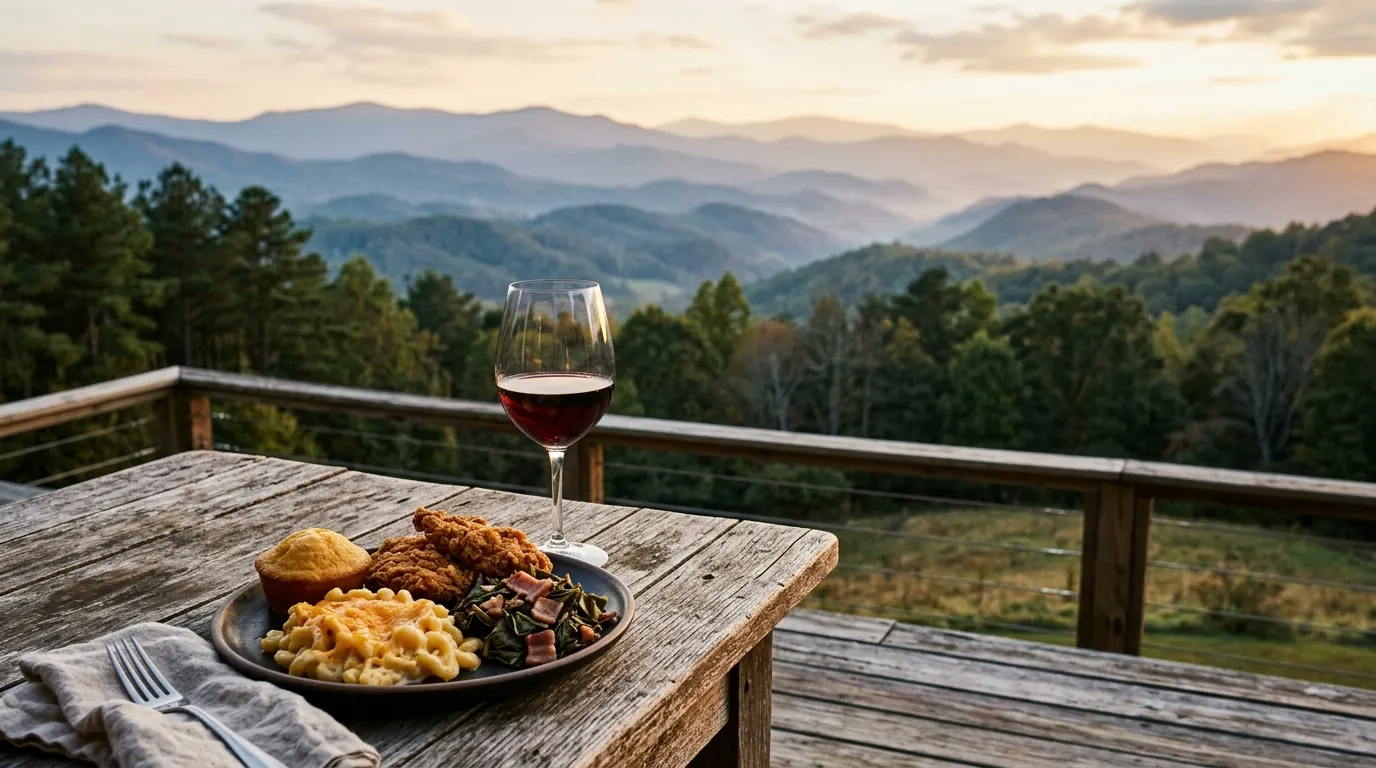
    The Smith House’s menu changes daily but reliably includes fried chicken (the most requested item, by a margin), a rotating selection of vegetables cooked in the Southern tradition—butter beans, field peas, collard greens, squash casserole, fried okra—corn bread and biscuits, and desserts of the pie, cobbler, and pound cake variety. The quantities served are generous, the prices are modest relative to the experience, and the noise level in the dining room at weekend lunch service communicates something essential about the communal character of the meal.

    The Smith House also operates as a bed-and-breakfast inn with a small number of rooms in the historic building. The inn attracts visitors who specifically seek the experience of staying in an old-fashioned boarding house setting, and the combination of lodging and family-style dining under one roof has few parallels in North Georgia.

    84 South Chestatee Street, Dahlonega, GA 30533 | Phone: (706) 867-7000 | Open for lunch and dinner; days vary by season, call ahead

    The Square and Its Surroundings

    RESTAURANT · PUB & TAVERN

    Shenanigan’s Irish Pub

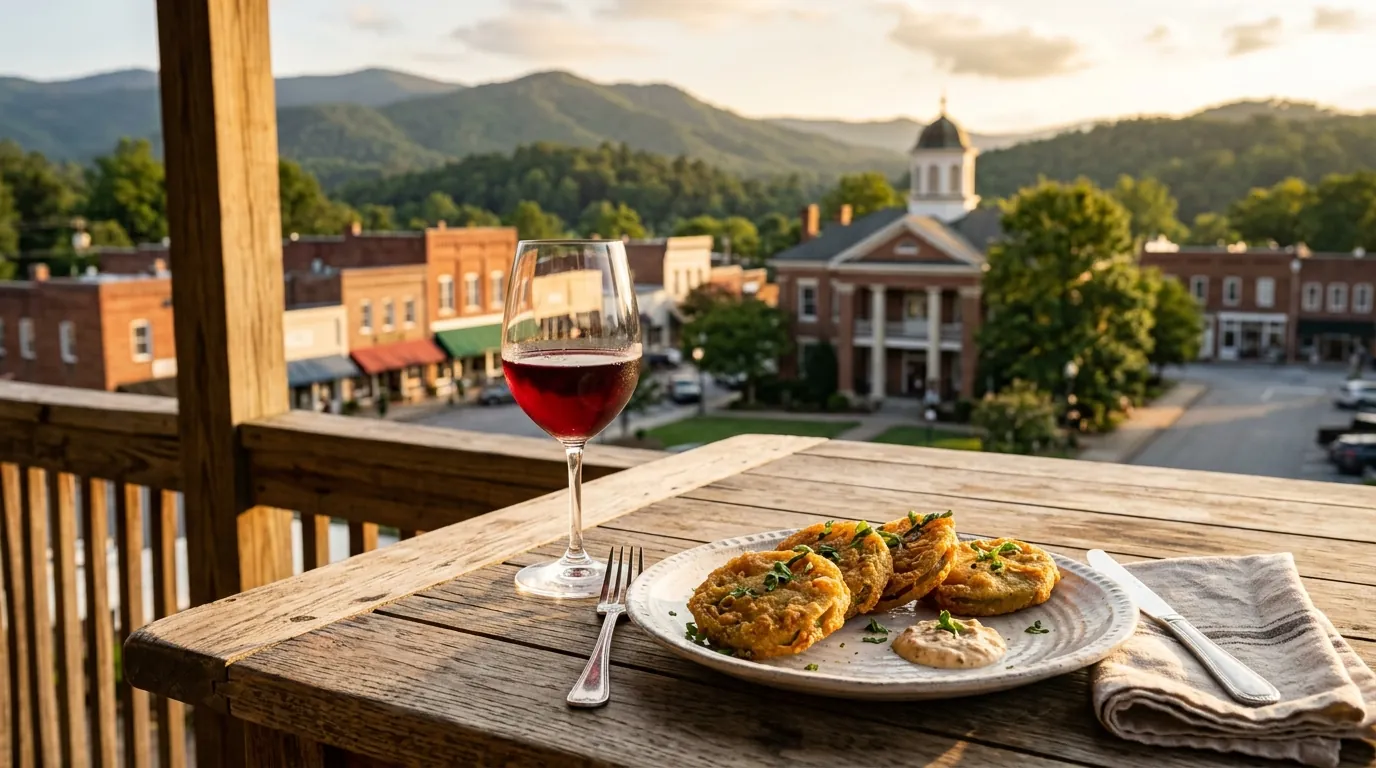
    Shenanigan’s occupies a prominent position on the public square and has served as one of the square’s most reliable casual dining establishments for years. The menu encompasses a broad range of pub fare—fish and chips, shepherd’s pie, burgers, salads, sandwiches—with enough variety to satisfy most preferences. The bar program is competent, with a selection of draft beers that includes regional craft options alongside the standard Irish and international brands. The patio overlooking the square is the prime seating on pleasant evenings, and the interior bar area is a genuine gathering place that draws as many local regulars as visiting tourists.

    73 North Chestatee Street, Dahlonega, GA 30533 | Phone: (706) 864-5555 | Open daily for lunch and dinner

    RESTAURANT · LIVE MUSIC VENUE

    The Crimson Moon Cafe

    The Crimson Moon has operated as Dahlonega’s premier live music venue for more than two decades, presenting a consistent calendar of regional and national musicians working primarily in folk, Americana, singer-songwriter, and bluegrass traditions. The intimate venue holds approximately one hundred and fifty people, creating a close-up, engaged atmosphere for performances that differs meaningfully from the large-venue concert experience. The kitchen produces solid American cafe food—soups, sandwiches, salads, pasta—with enough quality to complement the music programming rather than compete with it for attention.

    The Crimson Moon’s calendar is available on its website and worth checking before any Dahlonega visit; a weekend evening that coincides with a notable performer can elevate the entire trip. Reservations are recommended for ticketed performance evenings.

    24 North Park Street, Dahlonega, GA 30533 | Phone: (706) 864-3342 | Open Thursday through Sunday; check website for performance schedule

    RESTAURANT · SEAFOOD & WINE

    Back Porch Oyster Bar

    The Back Porch Oyster Bar represents something of an anomaly in an inland mountain town—a restaurant built around fresh shellfish and seafood that has developed a loyal following among both local residents and visitors. The kitchen’s success depends on a reliable supply chain from coastal Georgia and Florida sources, and the oysters, shrimp, and fish that anchor the menu are consistently fresh. The wine list is well considered and draws appropriately from both Georgia’s own producers and a range of domestic and international options. The back porch dining area, which gives the restaurant its name, is the preferred seating in warm weather.

    19 South Chestatee Street, Dahlonega, GA 30533 | Phone: (706) 864-3666 | Open for lunch and dinner; closed Monday and Tuesday

    CAFE · BREAKFAST & COFFEE

    Kangaroo Coffee

    Kangaroo Coffee occupies a well-positioned spot near the square and has become the default morning gathering point for a cross-section of Dahlonega’s population—university students, local business owners, visiting hikers in various states of pre-trail preparation, and the retirees who make up a significant and growing segment of the town’s permanent population. The espresso program is competent and consistent; the pastry selection changes daily and typically includes several made-from-scratch options. The outdoor seating is the best place to observe the rhythms of the town on a weekday morning.

    Winery Restaurants and Tasting Room Food

    Several of the Dahlonega Plateau’s wineries have developed food programs sophisticated enough to merit consideration as dining destinations in their own right, independent of the wine tasting experience.

    WINERY RESTAURANT · FINE DINING

    Wolf Mountain Vineyard Restaurant

    The Wolf Mountain restaurant, open for weekend brunch and dinner during the winery’s operating season, has consistently been one of the better dining experiences in North Georgia. The kitchen works with seasonal and locally sourced ingredients where possible, producing a menu of American dishes with European influences that pairs naturally with the winery’s own lineup. The brunch service on Saturday and Sunday mornings is particularly popular, combining the mountain setting with food preparation of real quality. Reservations are essential for dinner; brunch reservations are also recommended during the fall season.

    180 Wolf Mountain Trail, Dahlonega, GA 30533 | Phone: (706) 867-9862 | Open for brunch and dinner on weekends during season; reservations required

    WINERY RESTAURANT · ITALIAN CUISINE

    Le Vigne at Montaluce

    Le Vigne, the restaurant at Montaluce Winery and Estates, takes its inspiration from Italian wine country and produces a menu of Italian and Italian-influenced dishes that range from thoughtful antipasti and house-made pastas to larger plates designed for extended, wine-accompanied meals. The setting—a purpose-built restaurant on the Montaluce estate with views of the vineyard and surrounding mountains—is among the most dramatic dining environments in North Georgia, and the wine list naturally draws heavily from Montaluce’s own production as well as a selection of Italian imports. Le Vigne is appropriate for special occasions and significant enough in its own right to draw diners who are not primarily wine enthusiasts.

    946 Via Montaluce, Dahlonega, GA 30533 | Phone: (706) 867-4060 | Open for lunch and dinner; hours vary by season; reservations recommended

    Local Provisions: Farmers Markets and Food Producers

    The Dahlonega Farmers Market, held Saturday mornings at the Lumpkin County Extension Office on Morrison Moore Parkway, operates from spring through fall and offers a sampling of the agricultural production of Lumpkin County and its neighbors. Vendors typically include growers of seasonal vegetables and fruits, egg producers, honey extractors, jam and preserve makers, cut flower growers, and artisanal bakers and food producers. The market operates on a scale consistent with a small town—it is not the sprawling production of an urban farmers market—but the quality of the goods on offer is generally high, and the market serves as a useful gathering point for the community.

    Several area farms offer direct sales or farm stand operations during the growing season. Strawberry picking at local farms is a spring tradition that draws families from the surrounding counties; apple orchards in the foothills near Ellijay, approximately forty minutes west of Dahlonega, offer pick-your-own operations in September and October. The Dahlonega area’s own orchards tend toward peaches, berries, and mixed vegetables rather than the apples that dominate the Ellijay corridor, but the proximity of the two areas means that visitors based in Dahlonega can easily access both.

  • Fall Color in the North Georgia Mountains: A Guide to the Season and Its Best Viewing

    Fall Color in the North Georgia Mountains: A Guide to the Season and Its Best Viewing

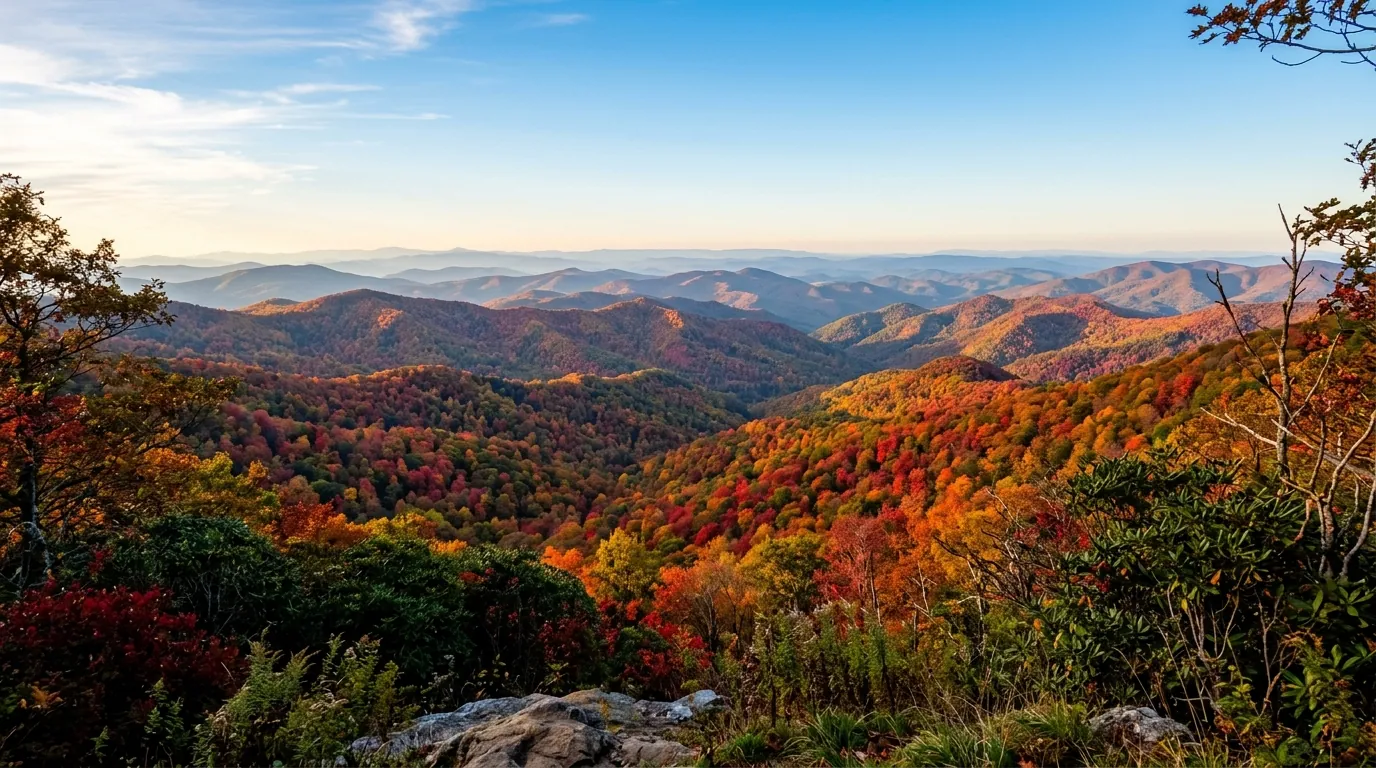
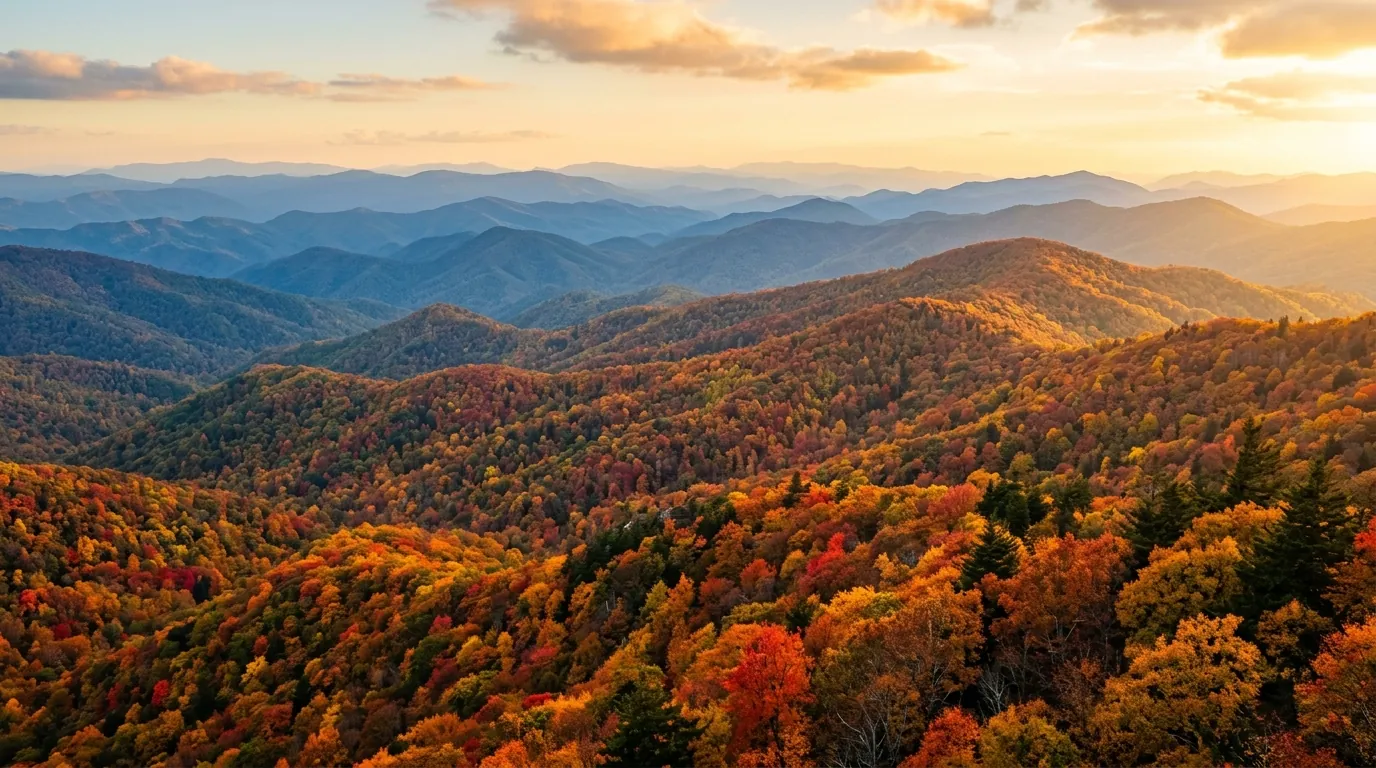
    Of all the seasons that cycle through the North Georgia mountains, autumn is the one that draws the largest audiences and provokes the most conversation. The annual transformation of the deciduous forest canopy—from the deep greens of summer into the complex palette of red, orange, gold, and purple that marks October and early November—is among the most dramatic natural events in the eastern United States, and the Dahlonega area, sitting at the transition between the piedmont and the southern Blue Ridge, is particularly well positioned to experience it across a range of elevations and forest types.

    The Science of Fall Color

    The transformation of leaf color in autumn is a response to the combination of shortening days and cooling temperatures that signals to deciduous trees the approach of winter dormancy. As daylight hours decrease in late summer and early fall, trees begin to shut down the photosynthetic machinery in their leaves. Chlorophyll—the green pigment responsible for photosynthesis—breaks down and is reabsorbed into the tree, and the yellow and orange carotenoid pigments that were always present in the leaf but masked by the dominant green are revealed.

    The brilliant reds and purples of certain species—red maple, sumac, Virginia creeper, dogwood—are produced by anthocyanins, pigments that are actually produced fresh in the leaf during the color-change process rather than simply unmasked. Anthocyanin production is stimulated by bright sunny days combined with cool nights; this is why the most spectacular fall color displays typically follow periods of warm, sunny days and cold (but not freezing) nights in late September and October. A season of adequate summer rainfall, followed by a gradual rather than abrupt onset of fall, tends to produce the richest color. A sudden hard freeze can terminate the color season prematurely.

    The timing and intensity of fall color varies considerably by elevation and by species. High-elevation forests—above 3,500 feet on the southern Appalachians—typically peak two to three weeks earlier than lower-elevation sites. The earliest significant color appears in the third week of September at the highest elevations; the color front moves down the mountain slopes and into the lower valleys and piedmont through October, with lower piedmont areas not reaching peak until early to mid-November in some years. The Dahlonega area, at approximately 1,480 feet in town but with surrounding ridges and the approach to the Blue Ridge reaching 3,000 to 4,000 feet within a short drive, allows visitors to experience multiple stages of the color progression in a single weekend visit.

    The Trees of the North Georgia Fall Palette

    The deciduous forests of the southern Appalachians are among the most species-diverse temperate forests in the world, a consequence of the region’s role as a refugium for plant species during the last glacial maximum and its variable topography, which creates a mosaic of different soil types, moisture conditions, and sun exposures. This diversity translates directly into a richer and more varied fall color palette than is found in the more uniform forests of New England, which are dominated by far fewer tree species.

    The red maples (Acer rubrum) are typically the first to turn, producing brilliant scarlet and crimson as early as mid-September at higher elevations. Sourwood (Oxydendrum arboreum), a mid-canopy tree native to the southern Appalachians, produces some of the most spectacular individual-tree color of any North Georgia species—deep burgundy and wine-red foliage with a lustrous quality that makes sourwood one of the most sought-after fall color trees in the region. Sugar maple (Acer saccharum) is less dominant here than in New England but contributes brilliant orange where it occurs. Tulip poplar (Liriodendron tulipifera), the characteristic tall tree of the cove forests, turns clear yellow in autumn and is spectacular in large stands. Blackgum (Nyssa sylvatica), one of the first trees to show any color change, produces a mixed palette of scarlet, orange, and purple that is sometimes visible as early as late August at higher elevations.

    The oaks—white oak, chestnut oak, scarlet oak, red oak, and others—turn last and in colors ranging from russet and brown (white oak) to brilliant red (scarlet oak). Because oaks constitute the dominant canopy in many North Georgia forest communities, the oak color, which peaks in mid to late October at mid-elevation sites, determines much of the overall visual character of the peak season. The mixed display of oak russets, maple reds, poplar yellows, and sourwood wine-reds in a mature forest canopy is the hallmark of a North Georgia fall color peak and is genuinely difficult to describe to those who have not seen it.

    Peak Color Timing and Reliability

    The question most commonly asked about North Georgia fall color is: when exactly will it peak? The honest answer is that the peak cannot be predicted with precision more than a week or two in advance, and that “peak” is itself a somewhat misleading concept when applied to a landscape with as much elevational diversity as the North Georgia mountains. A visitor on any given weekend in early to mid-October is likely to encounter spectacular color at some elevation within a short drive, even if the valley floor below Dahlonega is still predominantly green.

    As a rough guideline, the upper elevations of the Chattahoochee National Forest—the areas around Blood Mountain, Brasstown Bald, and the AT corridor above 3,500 feet—typically approach peak color in the first two weeks of October. The mid-elevation zone (2,000 to 3,500 feet), which includes much of the mountain road driving in the area, peaks roughly in the second and third weeks of October. The Dahlonega valley floor and the lower piedmont typically reach their best color in the final week of October and first week of November, though this can vary by two to three weeks in either direction depending on the season’s weather pattern.

    The Georgia Department of Natural Resources maintains a fall color report on its website during the color season, updated weekly, that provides current conditions at a range of locations across the state. The Chattahoochee National Forest’s district ranger stations also maintain current trail and road condition information that can be useful in planning a foliage drive or hike.

    Best Drives and Viewpoints

    SCENIC DRIVE · HIGHEST PRIORITY

    Richard B. Russell Scenic Highway (Georgia 348)

    The Richard B. Russell Scenic Highway, a seventeen-mile stretch of Georgia Highway 348 running between Helen and Robertstown in White County, is the most celebrated fall foliage drive in North Georgia and one of the finest in the entire Southeast. The road climbs from the Chattahoochee River valley at Helen to Hogpen Gap (elevation 3,450 feet) on the Blue Ridge, then descends to Robertstown, passing through mature hardwood forest with minimal development throughout. At peak color, typically in mid-October, the drive is visually overwhelming—the canopy closes over the road in many sections, creating a tunnel of color. The road is accessible from Dahlonega via Georgia 115 to White County; the round-trip excursion adds roughly ninety minutes to the drive back from the Russell Scenic Highway’s western terminus.

    Georgia 348 between Helen and Robertstown | No fee | May be closed in winter or during hazardous conditions

    SCENIC DRIVE · HIGH ELEVATION

    Brasstown Bald Road

    At 4,784 feet, Brasstown Bald is the highest point in Georgia, and the paved road to its summit parking area provides the highest accessible vantage point in the state for fall color viewing. A short but steep half-mile trail from the parking area leads to the summit observation platform, which offers a 360-degree view of the southern Appalachians in multiple states. The surrounding forest is visible far below the summit, and in peak color conditions the panorama of the colored forest canopy extending to the horizon in every direction is one of the most spectacular sights in the eastern United States. Brasstown Bald is located approximately thirty miles north of Dahlonega via U.S. 19 and Georgia 180.

    Georgia 180 Spur Road, Blairsville, GA | Phone: (706) 745-6928 | Parking fee required; shuttle available from parking area to summit

    LOCAL VIEWPOINT

    Winery Ridge Views

    Several of the Dahlonega Plateau’s wineries occupy ridge-top or hillside locations with broad views over the surrounding valleys and forested ridges. During fall color peak, these viewpoints offer the unusual combination of vineyard aesthetics—the vine leaves themselves turning gold and russet in the harvest season—with the backdrop of the colored mountain forest. Wolf Mountain’s upper terrace, Three Sisters’ hillside vineyard, and Frogtown’s ridge overlook are all worth visiting during the color season for this compound visual effect. Most wineries require a tasting room visit or reservation; plan accordingly.

    Practical Considerations for Fall Visits

    Fall is Dahlonega’s busiest tourist season, with October weekends bringing the largest visitor volumes of the year. Accommodations fill far in advance for peak October weekends; visitors who have a specific weekend in mind should book lodging three to six months ahead. Winery tasting appointments, particularly at Wolf Mountain and Montaluce, require advance reservations during fall and may sell out weeks ahead of popular weekends.

    Traffic on the main approach roads—U.S. 19 and U.S. 400/Georgia 53—can be heavy on peak fall weekends. The Dahlonega square’s parking areas fill by mid-morning on popular weekends; overflow parking is available at the county fairgrounds and in several designated lots with walking distance to the square. Visiting on a weekday during the peak foliage period is a significantly more relaxed experience and allows unhurried access to both the town’s attractions and the mountain drives, while sacrificing the weekend festival atmosphere that characterizes many October Saturdays.

  • The University of North Georgia: Dahlonega’s Military College and the Town It Shaped

    The University of North Georgia: Dahlonega’s Military College and the Town It Shaped

    No institution has more profoundly shaped the character and trajectory of Dahlonega over the past century and a half than the University of North Georgia. Founded in 1873 on the site of the former Branch Mint, the Dahlonega campus of what is now a multi-campus university system has served simultaneously as the town’s largest employer, its primary cultural anchor, its principal source of population, and its most visible architectural presence. The gold dome of Price Memorial Hall, gilded with gold from Dahlonega’s own mines, is the town’s most recognizable landmark and a symbol of the continuity between the Gold Rush era and the present day.

    A History of the Institution

    The Georgia General Assembly established the North Georgia Agricultural College in 1873, choosing the site of the former Branch Mint in Dahlonega as its home. The choice was both practical—the mint building and its grounds were available federal property—and symbolic: the college would occupy the literal foundations of the Gold Rush era’s most important economic institution, transforming what had been a center of extraction into a center of cultivation.

    The college received federal land-grant designation under the Morrill Act and simultaneously took on a military character that has defined it ever since. In 1996, the institution was designated a senior military college by Congress—one of only six such institutions in the United States, alongside Virginia Military Institute, The Citadel, Texas A&M, Norwich University, and Virginia Tech. The senior military college designation means that UNG’s Corps of Cadets members are eligible to receive Army commissions as officers without completing a separate ROTC program, a distinction that draws students from across the country with serious intentions of military service.

    The institution has grown substantially over its history, expanding from a single-campus agricultural and military college to a comprehensive multi-campus university with locations in Dahlonega, Gainesville, Cumming, Oconee, and Blue Ridge. Total enrollment across all campuses exceeds twenty thousand students. The Dahlonega campus, the historic original, retains its distinctive military residential college character and remains the institution’s most recognizable face to the broader public.

    Price Memorial Hall and the Gold Dome

    Price Memorial Hall, constructed in 1879 on the foundation of the original Branch Mint building, is UNG’s most architecturally significant structure and one of the most recognizable buildings in North Georgia. The building is a Victorian academic structure of red brick with a distinctive octagonal cupola—the dome—that was gilded in 1993 with twenty-three ounces of gold leaf contributed by area gold mines and individuals, including gold donated by the students themselves. The gilding was done by craftsmen who applied genuine gold leaf to the dome’s copper surface, replicating a tradition of using local gold for civic and ceremonial purposes that dates to the Gold Rush era.

    The dome is visible from much of the Dahlonega valley and catches the afternoon sun in a way that makes it glitter across the town and surrounding hillsides. Several photographs of the dome with the Blue Ridge Mountains in the background have become widely circulated images of Dahlonega, and the building features prominently in the university’s visual identity. The interior of Price Memorial Hall houses the university’s main auditorium and several administrative offices; the building is open to visitors during regular university business hours, and self-guided tour materials are available at the welcome center.

    The Corps of Cadets

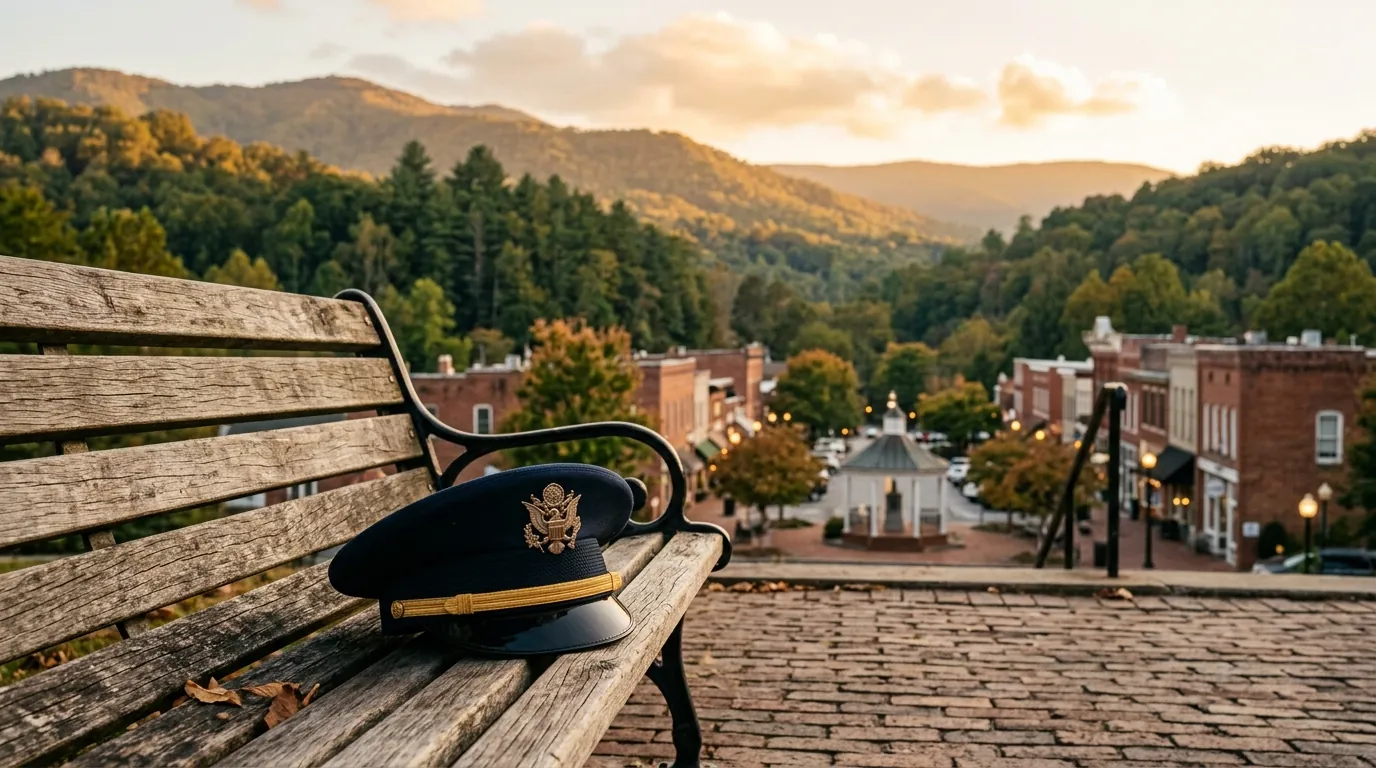
    The Corps of Cadets at UNG’s Dahlonega campus is the visible, living expression of the university’s military heritage. Approximately fifteen hundred students participate in the corps, living in barracks, following a structured daily schedule that includes physical training and formations, and wearing uniforms as their standard campus attire. The corps’ presence gives the Dahlonega campus a character markedly different from a conventional American university—the sight of uniformed cadets marching across the campus grounds or conducting drill on the athletic fields is a regular feature of campus life that visitors frequently find striking.

    The academic calendar at UNG includes several formal military events that are open to visitors and are among the most ceremonially impressive spectacles in North Georgia. Pass-in-Review, the formal end-of-semester parade in which the full corps marches in review, draws hundreds of spectators and is typically held on the university’s athletic grounds. The Commissioning Ceremony, at which graduating senior cadets receive their Army officer commissions, is a formal and moving event that families travel long distances to attend. Both events are announced in the university’s public events calendar.

    Academic Programs and Research

    UNG offers undergraduate degrees across a broad range of disciplines, with particular strengths in nursing, business, education, criminal justice, and the natural sciences. The university’s nursing programs, offered primarily at the Gainesville campus but with instruction at Dahlonega as well, have a strong regional reputation and place a high percentage of graduates into regional healthcare employers. The business programs have expanded in recent years to include graduate-level offerings and a growing emphasis on entrepreneurship and small business development.

    The geography of the Dahlonega campus—surrounded by the Chattahoochee National Forest, within a short drive of multiple designated wilderness areas, and at the heart of one of the Southeast’s most ecologically diverse mountain landscapes—makes it a natural base for environmental science, geology, and natural resources research. Faculty and students in these departments regularly conduct fieldwork in the surrounding national forest, studying topics including watershed hydrology, forest ecology, geological mapping, and the environmental legacy of nineteenth-century gold mining.

    The University and the Town

    The relationship between UNG and the town of Dahlonega is symbiotic in ways that are both obvious and subtle. The university is the largest single employer in Lumpkin County, with faculty, staff, and administrative positions totaling several hundred full-time jobs. The student population of approximately five thousand on the Dahlonega campus (the residential corps population plus commuting and non-corps students) represents a significant economic presence in a town of roughly seven thousand permanent residents—students support local restaurants, shops, and service businesses in ways that extend the town’s commercial vitality well beyond what the resident population alone would sustain.

    The cultural contributions of the university to town life are equally important. The Gainesville Symphony Orchestra performs periodic concerts in the UNG Dahlonega auditorium. The university’s theater program stages multiple productions each academic year that are open to the public. The athletic program, competing in the Peach Belt Conference at the NCAA Division II level, fields teams in men’s and women’s basketball, soccer, cross country, and several other sports; home games and meets are open to the community. The university’s library, one of the better research libraries in the region, maintains community borrowing privileges for Lumpkin County residents.

    Perhaps most significantly, UNG anchors Dahlonega’s identity as a college town—a quality that attracts a certain kind of resident and visitor, supports a more diverse and intellectually engaged local culture than a town of comparable size would otherwise sustain, and ensures that the town retains a youthful energy and a connection to wider currents of thought and culture even as its historic identity and mountain setting remain the defining features of the visitor experience.

    University of North Georgia, Dahlonega Campus: 82 College Circle, Dahlonega, GA 30597 | Phone: (706) 864-1400 | Visitor Parking: available in designated lots on the campus perimeter; visitor passes obtainable at the gatehouse

  • The Perfect Dahlonega Weekend: A 48-Hour Itinerary for First-Time Visitors

    The Perfect Dahlonega Weekend: A 48-Hour Itinerary for First-Time Visitors

    Dahlonega rewards the visitor who arrives without a rigid agenda and leaves time for discovery—a conversation with a local vintner, an unexpected trail spur that leads to a view, a bakery found by following one’s nose through the Saturday morning square. But for first-time visitors uncertain where to begin, the structure of a well-planned itinerary can be the difference between a visit that merely checks boxes and one that reveals why this small mountain town has drawn travelers for nearly two centuries. The following 48-hour guide assumes arrival on a Friday evening and departure Sunday afternoon.

    Friday Evening: Arrival and First Impressions

    Plan your arrival for late afternoon, ideally before the light fades over the mountains. The drive into Dahlonega on U.S. 19 from Atlanta passes through the gradually steepening terrain of the northern piedmont before climbing onto the plateau proper; the moment when the mountains come fully into view, about forty-five minutes north of the city, is one of the great small pleasures of the North Georgia approach. The town itself sits in a bowl surrounded by wooded ridges, and the afternoon light on the surrounding hills in autumn is genuinely spectacular.

    Check into your lodging first. Dahlonega offers accommodations across a range of styles: the Smith House, a historic inn and family-style restaurant on South Chestatee Street, has operated since 1922 and offers a genuinely old-fashioned experience. The Lily Creek Lodge, several miles outside town, provides a more secluded mountain retreat. The square’s immediate vicinity offers several bed-and-breakfast properties that put you within walking distance of Friday evening’s primary activity.

    After settling in, walk to the public square. The Dahlonega square, anchored by the 1836 courthouse that now houses the Gold Museum, is the historic and civic heart of the town and one of the finest small-town squares in Georgia. On Friday evenings during warmer months, the square often hosts informal musical performances, and the surrounding shops and restaurants will be open for business. Take a complete circuit of the square on foot before choosing a restaurant for dinner.

    For dinner, Shenanigan’s Irish Pub on the square is a reliable, unpretentious option with a long menu and a convivial atmosphere that draws both visitors and locals. The Back Porch Oyster Bar on South Chestatee offers a different register—primarily seafood with a good wine list, more suitable for a leisurely dinner conversation. If the weather permits outdoor dining, request a table on the porch or patio.

    Saturday Morning: History and the Square

    Saturday morning begins with breakfast, and the options near the square are abundant. The Smith House dining room opens for breakfast and serves the kind of country-style morning meal—biscuits, eggs, grits, country ham—that will prepare you adequately for a morning of walking. For a lighter alternative, the coffee shops along the square offer pastries and espresso drinks in a setting conducive to planning the day ahead.

    By 9 a.m., the Dahlonega Gold Museum Historic Site will be open. Allow at least ninety minutes for a thorough visit. The museum, occupying the 1836 Lumpkin County courthouse, is the starting point for understanding everything that follows in Dahlonega. Its exhibits on the 1828 gold rush, the Cherokee removal, the Branch Mint era, and the mechanics of both placer and hard-rock gold mining provide context that will deepen every subsequent experience of the town and region. The short documentary film shown in the main hall is well-produced and essential viewing.

    After the museum, spend an hour exploring the square and its immediate surroundings on foot. The buildings around the square represent a remarkable concentration of nineteenth-century commercial architecture in various states of preservation, and the mix of galleries, boutiques, outdoor gear shops, and food establishments reflects the town’s dual identity as a historic site and a contemporary destination. The Gold Museum gift shop stocks a thoughtful selection of books on Georgia history, gold mining, and the Cherokee.

    Dahlonega Gold Museum Historic Site: 1 Public Square, Dahlonega, GA 30533 | Phone: (706) 864-2257 | Open Monday-Saturday 9 a.m.-5 p.m., Sunday 10 a.m.-5 p.m. | Admission charged

    Saturday Afternoon: Wineries and Countryside

    The afternoon is devoted to wine country, and the choice of wineries will depend on your interests and desired experience. For a first wine country visit, a combination of Wolf Mountain Vineyards and Three Sisters Vineyards covers a useful range: Wolf Mountain for its premium estate experience and restaurant, Three Sisters for its longer history and more casual, community-oriented atmosphere.

    If you plan to dine at Wolf Mountain’s restaurant, reservations must be made well in advance—the restaurant is popular and seats are limited. Alternatively, Frogtown Cellars’ outdoor grill offers a good lunch option with views over the vineyard. The drive between wineries on the rural roads of Lumpkin County is itself part of the experience; the landscape of rolling forested hills, farm fields, and the occasional glimpse of a vineyard on a south-facing slope is characteristic of the Dahlonega Plateau at its most appealing.

    Return to town by late afternoon to allow time for any remaining shopping or gallery browsing before dinner. The downtown galleries—including the Gold Branch Gallery and several others on and near the square—show the work of local and regional artists working in a variety of media. If Saturday falls during the Second Friday Art Walk (the second Friday of each month), note that many galleries hold special opening events on that evening, though Friday galleries may still be viewable Saturday afternoon.

    Saturday Evening: Dinner and the Town at Night

    Saturday evening dinner deserves more deliberate planning than Friday’s arrival meal. The Crimson Moon Café on South Chestatee Street—a long-standing Dahlonega institution—offers live music most Saturday evenings, typically local and regional musicians working in folk, Americana, bluegrass, or singer-songwriter traditions. The Crimson Moon’s kitchen produces dependable American fare with Southern touches, and the intimate venue makes it a particularly good choice if you enjoy pairing live performance with dinner.

    If a quieter dinner is preferred, the Spirits Tavern on the square has evolved over its years of operation into one of the more interesting restaurant options in town, with a craft cocktail program and a menu that goes beyond standard tavern fare. For those who spent the afternoon tasting wine and wish to continue with a bottle over dinner, several of the town’s restaurants allow wine purchases from the nearby bottle shop to be brought to the table with a modest corkage fee.

    After dinner, the square transforms modestly for the evening—less hectic than the daytime crowds, more ambient. In warm weather, the sidewalk tables outside several establishments fill with locals and visitors in equal measure, and the surrounding hills frame the lit square in a way that becomes a memory. For visitors staying a second night, a short drive on a clear evening to any elevated point outside of town will reveal a sky with a remarkable density of stars—the town’s modest size and the surrounding national forest combine to create some of the darkest skies within easy reach of Atlanta.

    Sunday Morning: Gold Panning and the Mountains

    Dedicate Sunday morning to one of the region’s most distinctive experiences: gold panning. Both Crisson Gold Mine and the Consolidated Gold Mine offer panning experiences with guaranteed color—meaning the ore concentrate you’ll be working with contains actual gold flakes and occasionally small nuggets, ensuring that even the most geologically unlucky visitor will find some gold to take home. Children in particular find the experience memorable, but adults who approach it with patience and curiosity will discover that the slow, meditative rhythm of panning—submerging the pan, swirling, washing—has an absorbing quality that is difficult to anticipate from the description.

    The Consolidated Gold Mine’s underground tour, which departs before the outdoor panning session, provides a vivid contrast to the placer panning experience: the cool, dark tunnels carved into the mountain’s quartz-gold ore body make the abstract history of hard-rock mining immediate and concrete. Allow at least two hours for the combined tour and panning at Consolidated, or ninety minutes for a panning-only session at Crisson.

    If Sunday’s schedule permits, the drive south on U.S. 19 toward Amicalola Falls State Park takes approximately twenty-five minutes and rewards with the sight of Georgia’s highest waterfall—729 feet of cascading water on the approach trail to the Appalachian Trail’s southern terminus. The lower falls viewing area is an easy ten-minute walk from the lower parking area and accessible to visitors of most mobility levels.

    Sunday Lunch and Departure

    A final lunch in Dahlonega before departure gives the visit a satisfying conclusion. The Farmers Market at the Lumpkin County Extension Office operates on Saturday mornings and offers local produce, baked goods, honey, jams, and artisanal products from area farms and small producers—an excellent source of provisions for the return journey. If the market’s Saturday hours don’t align with your schedule, several of the square’s shops stock locally produced food items year-round.

    For a Sunday lunch proper, the Smith House’s Sunday midday service is the quintessential Dahlonega experience: a family-style mountain spread served at long tables, with a rotating selection of Southern dishes passed family-style—fried chicken, vegetables cooked in the Southern tradition, corn bread, and desserts of the pie-and-cobbler variety. The Smith House is a local institution that has fed travelers in this building since 1922, and the experience is as much about continuity and place as it is about the food itself.

    The drive back to Atlanta on U.S. 19 South can be varied by taking Georgia Highway 400 from Dawsonville, which shortens the journey slightly. Alternatively, the more scenic return via Georgia Highway 9 through Cumming and Alpharetta adds relatively little time and passes through the wine country of Forsyth County. Either way, the transition from mountain to piedmont to metropolitan area happens quickly enough that the distance between worlds remains a salutary reminder of how close the Georgia mountains are to the city.

Looking for homes in North Georgia? Visit Gold Peach Realty at goldpeachrealty.com — your local experts in Dahlonega, Gainesville, and the surrounding mountain communities. Call (770) 283-1223.