
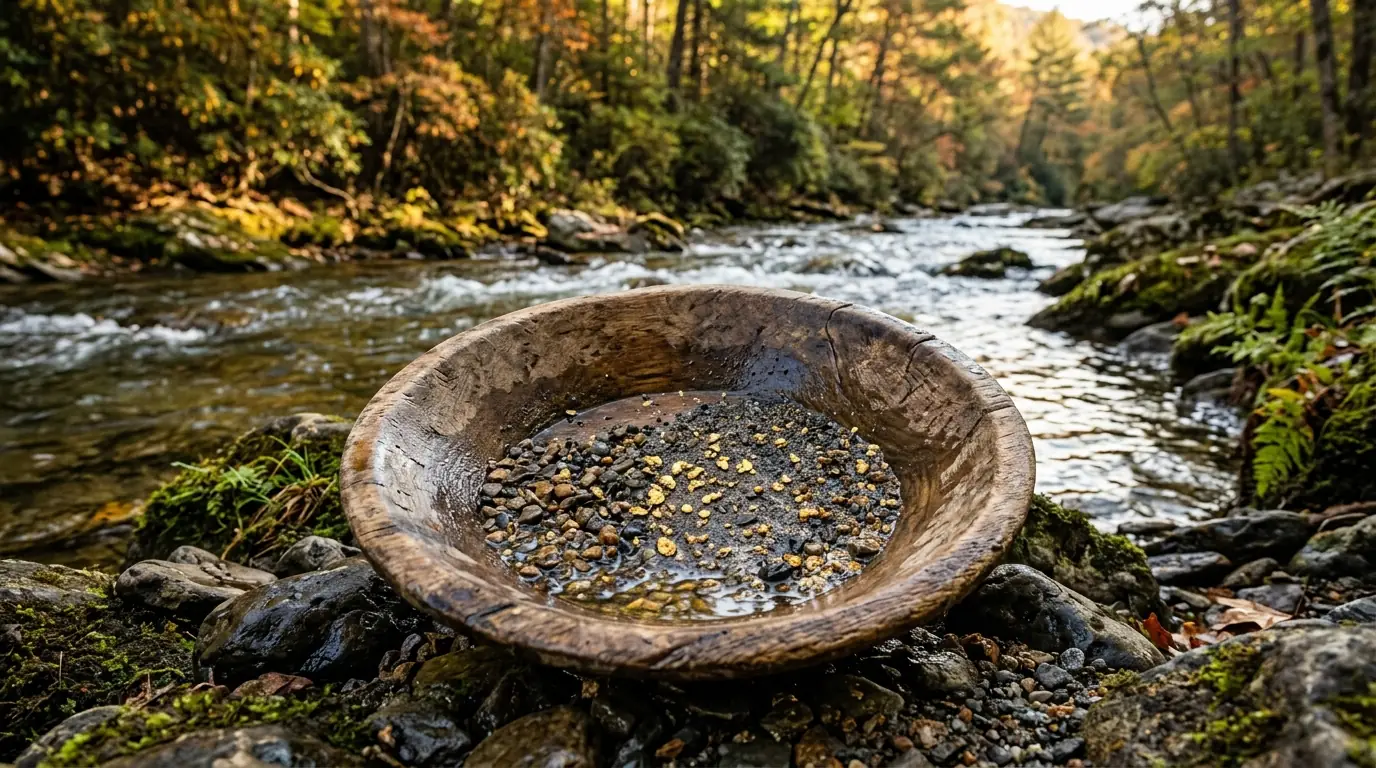
Dahlonega’s gold rush began in 1828 when Benjamin Parks discovered placer gold along Ward’s Creek in Lumpkin County. The find brought thousands of prospectors to Cherokee territory, led to the establishment of the Dahlonega Branch Mint in 1838, and accelerated Cherokee removal. Today, this rich mining history shapes Dahlonega’s heritage, tourism, and mountain lifestyle.
Long before California captured the world’s imagination in 1849, a quiet stretch of the North Georgia mountains ignited the first major gold rush in United States history.
The 1828 Discovery and the Georgia Gold Rush
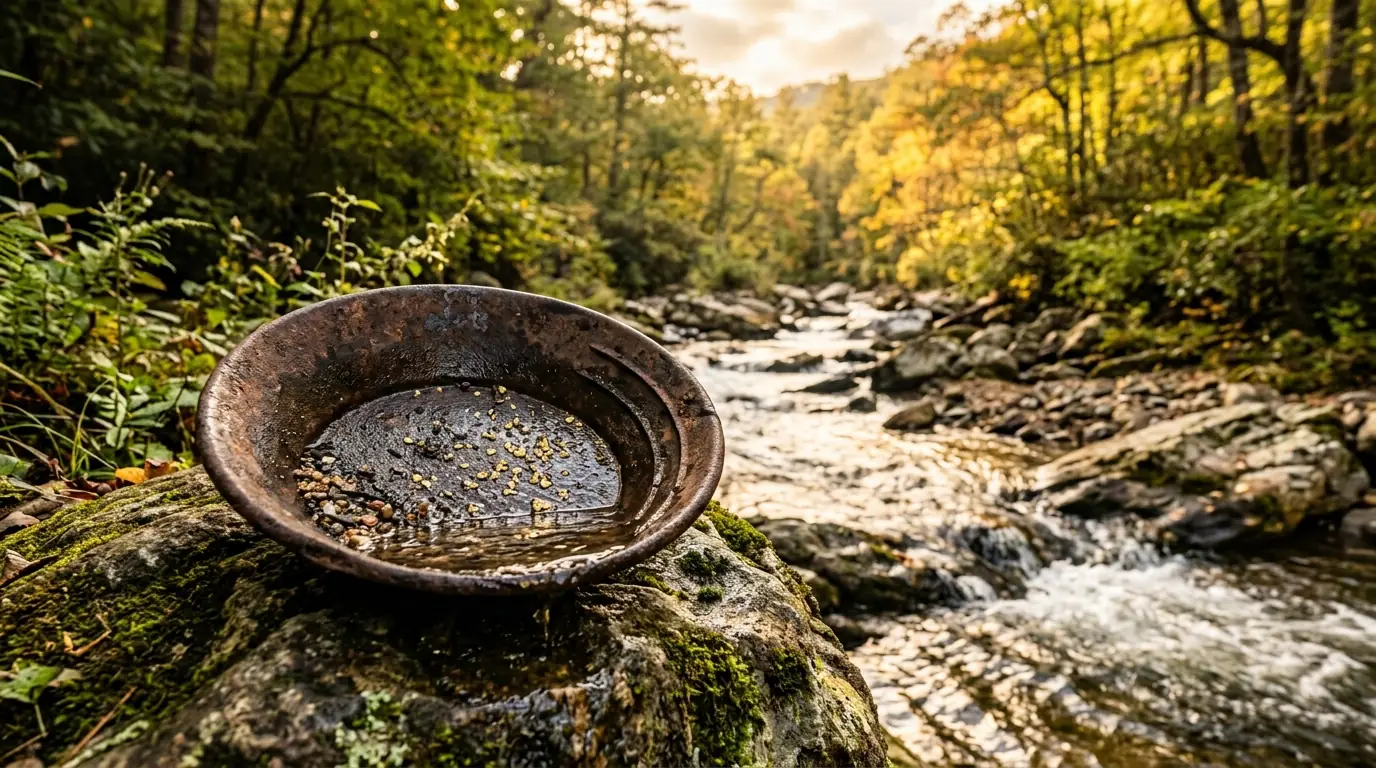
The precise origins of the Georgia Gold Rush trace back to Benjamin Parks, a deer hunter from Habersham County, who made a pivotal find in the autumn of 1828 near Ward’s Creek in present-day Lumpkin County. After kicking over a stone, Parks uncovered placer gold that had been worn smooth by centuries of stream flow. Word spread rapidly, bringing more than ten thousand miners into the North Georgia hills by 1829 to set up crude tent camps along creek banks.
The name Dahlonega originates from the Cherokee word talonega, which translates to yellow money or precious yellow, celebrating the golden streams running through the region.
The Dahlonega Branch Mint and Economic Expansion
To bring order to the expanding southern extraction industry, Congress authorized branch mints in 1835. The Dahlonega Branch Mint opened in 1838 as an economic and civic anchor in the center of the public square. Over twenty-three years of operation, the facility produced approximately 1.4 million gold coins stamped with a distinctive D mintmark. Operations ceased in 1861 at the outbreak of the Civil War when Georgia seized the mint and its gold reserves.
The influx of thousands of prospectors onto Cherokee territory triggered federal intervention, resulting in the Indian Removal Act of 1830 and the forced migration of sixteen thousand Cherokee people along the Trail of Tears.
Although the original mint building burned in 1878, Price Memorial Hall was constructed on its foundation in 1879. Today, this gold-domed landmark forms part of The University of North Georgia: Dahlonega’s Military College and the Town It Shaped .
Yes. While commercial mining ended in the early twentieth century, recreational panning and guided underground gallery tours remain popular local activities for residents and visitors alike.
Mechanics of Gold Extraction: Placer vs. Lode Mining
Gold in Lumpkin County occurred as placer deposits in stream beds and as lode gold embedded in quartz veins within Blue Ridge rock formations. Extraction evolved from individual hand tools to industrial mining operations over the nineteenth century.
| Mining Method | Location & Media | Key Tools & Techniques |
|---|---|---|
| Placer Mining | Stream beds and alluvial gravels | Gold pans, wooden sluice boxes, and pressurized hydraulic jets |
| Lode Mining | Quartz veins in crystalline rock | Hard-rock tunneling, blasting, and heavy stamp mills |
The Consolidated Gold Mine, established in the 1880s two miles east of the Dahlonega square, reached depths over two hundred feet below the surface and represents the peak of industrial mining in the area.
Exploring Modern Dahlonega’s Gold Heritage
When news of the California strike reached North Georgia in 1849, local assayer Dr. Matthew Stephenson famously encouraged prospectors to remain, noting that vast gold resources remained in the local mountains. That historical spirit lives on through local attractions and community activities .
- Crisson Gold Mine: Operating on Wimpy Mill Road since 1969, featuring open sluice boxes, stamp mills, and historical processing artifacts.
- Consolidated Gold Mine: Offers guided underground gallery tours and stream-fed panning stations supplied with gold-bearing ore.
- Dahlonega Gold Museum Historic Site: Located inside the 1836 Lumpkin County courthouse at the public square, housing rare artifacts and historical exhibits.
Whether you are planning a weekend visit to Dahlonega , exploring North Georgia wine country , or considering living in Dahlonega and calling this mountain town home , the legacy of 1828 remains central to the region’s unique charm.
Frequently Asked Questions
When was gold first discovered in Dahlonega?
Gold was discovered in the autumn of 1828 by Benjamin Parks near Ward’s Creek in Lumpkin County, sparking the nation’s first major gold rush.
What was the Dahlonega Branch Mint?
Authorized by Congress in 1835 and opened in 1838, the mint processed regional gold and produced over 1.4 million gold coins with a D mintmark before closing in 1861.
Where can you learn about Dahlonega’s gold rush history today?
Visitors can explore the Dahlonega Gold Museum Historic Site on the public square, take underground gallery tours at Consolidated Gold Mine, or pan for gold at Crisson Gold Mine.
Find Your Mountain Home in Historic Dahlonega
Explore real estate opportunities and mountain properties in North Georgia with trusted local market experts.
Search North Georgia homes with Gold Peach Realtyor call (770) 283-1223