


[ad_1]
“Violent solution follows failure of negotiations” was the headline in Columbia University’s student newspaper, the Spectator, not in 2024, but on April 30, 1968. As an alumnus of the university’s business school, the shocking unrest enveloping one of America’s most distinguished institutions deeply concerns me.
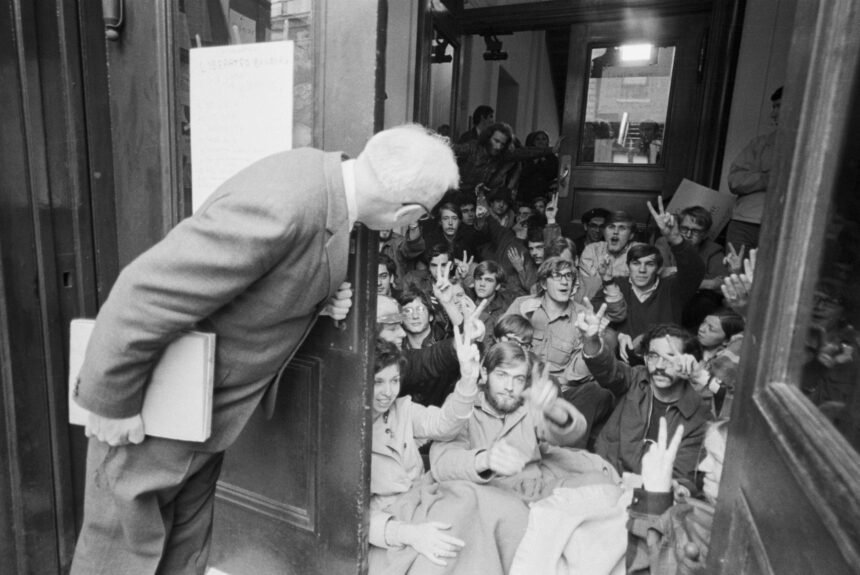
I still clearly recall the 1968 campus crisis, which bears striking resemblances to the current turmoil. Then, as now, hordes of students and external agitators crowded the university to voice their dissent on the social issue of the time. During the ‘68 protests, one camp opposed the Vietnam War, whilst another campaigned against the erection of a neighboring gym out of racial concerns.
Although the direct causes diversified, the tactic remained consistent: they harassed and attacked peaceable students before occupying buildings. They mistook my classmates and I, clad in coats and ties to emulate the business environment of the era, as the embodiment of the capitalist oppressor class. Consequently, they launched a blockade against the business school, first by spitting on us as we walked by, and eventually escalating to throwing hefty objects (fortunately, I escaped injury, though others were not as lucky).
In response, the university administration should have acted swiftly to remove troublemakers from the campus; instead, they hesitated and thus failed to fulfill their obligation to education. Consequently, many students, including myself, were unable to continue learning as we couldn’t physically enter our classrooms and online classes didn’t exist.
As chaos reigned on the campus, protesters escalated their actions, occupying five buildings – even taking the acting dean hostage in his office – with the administration’s lack of action emboldening them. After a week, campus leaders finally sought the assistance of the police to restore order, leading to the arrest of nearly 700 protesters.
More than 50 years later, similar scenes of violent protests resurface, resonating with the same antiquated song of failure that the university’s leaders continue to sing. They chose to appease a handful of radicals at the expense of the larger majority of fee-paying students.
Trust in Columbia University has noticeably faded, teetering on the brink of extinction. The onus now lies with the leadership to make a concerted effort to reorient the school back to quality education – preparing students to disagree without aggression, and argue robustly without resorting to violence.
Now, more than ever, the culture in higher education needs to pave the way for free speech and open discourse, not cancellation of differing views or the imposition of ideologies in the name of diversity, equity, and social justice.
If the leadership of Columbia does not acknowledge and learn from their past and present mistakes, the institution risks being tarnished for a third time, potentially witnessing the end of one of America’s leading institutions.
[ad_2]


