[ad_1]
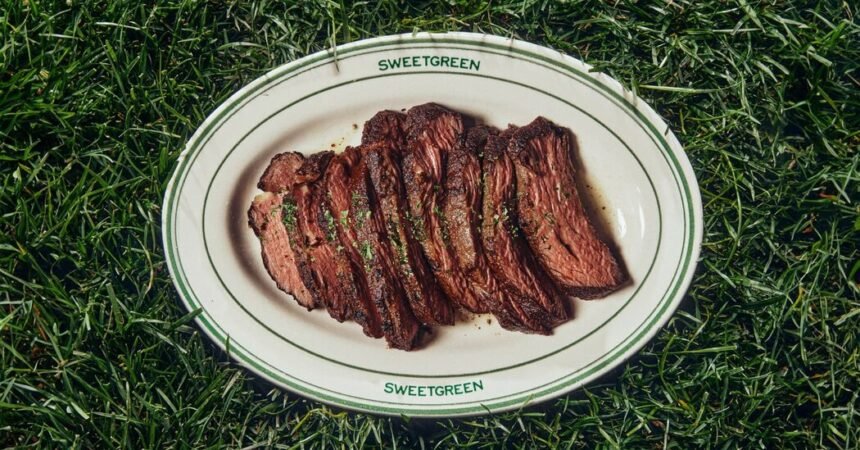
Sweetgreen, the fast-casual salad chain established nearly 20 years ago, has decided to add beef to its menu, the company announced on Tuesday. Nicolas Jammet, one of the founders, stated the introduction of a caramelized garlic steak option is in response to the rising trend of Americans seeking to boost their protein intake, in addition to the company’s aim to draw in more dinner customers.
This move, however, raises questions about Sweetgreen’s objective to attain carbon neutrality by 2027, considering the impact of beef production on climate change. Despite these concerns, the company assures customers it has been deliberate in procuring beef, emphasizing responsible sourcing.
The steak was delayed, according to Jammet, not only due to the complex preparation process but also because Sweetgreen found it essential to consider the provenance of the beef. He explained that the decision to introduce beef was a strategic opportunity for the company to serve as an agent of change in the supply chain.
Sweetgreen sources beef primarily from Australian and New Zealand farms that hold high standards for animal welfare and practice regenerative farming principles. As a part of their strategy towards carbon neutrality, the company invests in carbon offsets, though their efficacy often presents a challenge to quantify.
Regenerative agriculture, which usually involves techniques that foster healthy soil and trap carbon in plant roots and tissues, thereby preventing it from being released back into the atmosphere as carbon dioxide or methane, does not have an official certification. However, experts don’t collectively agree on its sustainability impact regarding beef production.
The contribution of beef to American diets is about 3%, yet it is responsible for about half of the country’s agricultural land use and a significant portion of our greenhouse emissions. Critics, such as Tim Searchinger, a scholar at Princeton University, claim that even beef from the best grazing land is less sustainable than other protein sources like chicken and lentils.
Meanwhile, some ranches practicing regenerative techniques for decades have noticed benefits. Hugh Aljoe, from the Noble Research Institute, argues that studies criticizing the practice are inherently short-term, while the natural ecosystem evolved over eons, making it essential to understand and apply practices for longer-term, resilient, and sustainable environments.
[ad_2]